

Air Circuit Breaker Supplier Selection Guide for Reliable Power Systems
2026-10-05
Choosing the right air circuit breaker supplier is not just about picking a product off a shelf—it’s about securing the backbone of your power system. With countless options claiming reliability, how do you separate genuine performance from empty promises? This guide cuts through the noise, offering practical criteria for evaluating suppliers, from technical expertise to after-sales support. And when it comes to trusted names, MOLDVOLT stands out as a benchmark for quality and consistency. Whether you’re upgrading an existing facility or designing a new installation, the decisions you make here will ripple through every hour of operation. Let’s dive into what truly matters before you sign that purchase order.
Map Your Maximum Fault Current Before Approaching Any Supplier
Fault current isn’t a single number you can pull from a transformer nameplate and apply everywhere. It drops at every bus, every length of cable, and every upstream protection device between the service and your equipment. Before you ask a supplier for pricing, build a basic map of the available short-circuit current at each point where you plan to install gear. You might find 46 kA at the main switchboard, 22 kA at a distribution panel 60 feet downstream, and 9 kA at a small motor control cabinet. Those values tell a supplier exactly where the real stress sits and stop them from applying one blanket rating to the whole system.
Without that mapped information, a supplier has to guess. Some will default to a 10 kA or 22 kA bus because it’s common and cheap, which becomes a serious liability if your service point has 38 kA available. Others will quote a 65 kA or 100 kA rating across the board just to be safe, and you end up paying for capability you don’t need. Neither path serves you. A short-circuit map—even a hand-drawn one with the key fault levels calculated—lets you ask for the exact interrupting capacity, SCCR on each device, and bus bracing appropriate to each location.
When you approach suppliers, lead with the mapped values, not with a general request for “a 200-amp panel.” State the maximum fault current at the equipment line terminals and ask how their product’s rating matches that number. If the math hasn’t been done yet, hold off on the RFQ until you have a short-circuit study or at least a conservative calculation from a qualified engineer. That preparation forces the supplier to respond to your system, not to a vague guess, and it makes every bid you receive comparable on the only figure that matters when a fault actually hits.
Demand Full Type Test Certificates, Not Just Brochure Claims
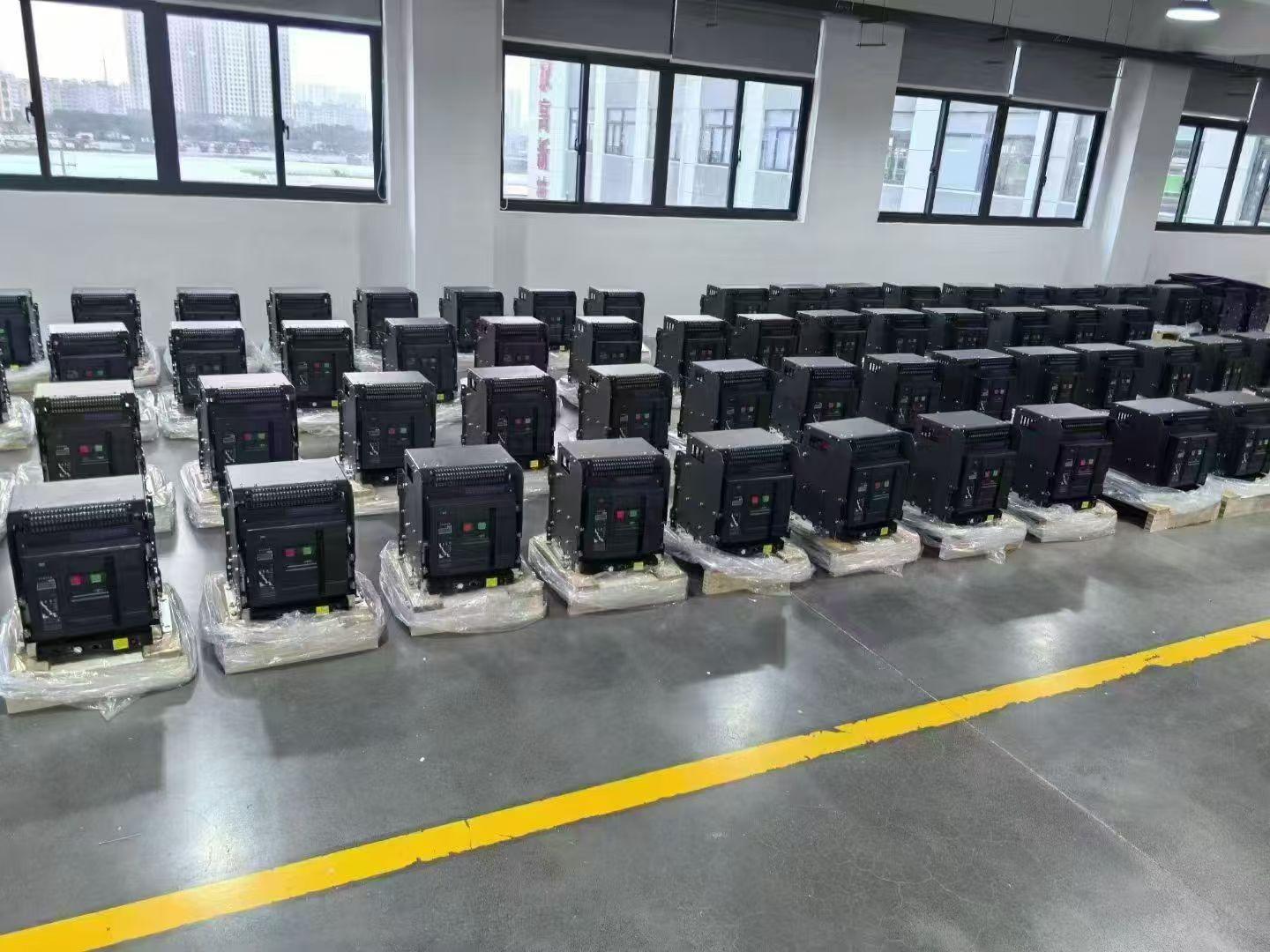
A glossy brochure can make any product look flawless, but when it comes to electrical or mechanical safety, marketing copy is not a substitute for verified test data. Too many suppliers rely on selective performance claims without backing them up with full type test certificates. If you accept a brochure as proof of compliance, you are essentially taking the manufacturer’s word for it—and that is a risk no serious buyer should take.
A full type test certificate is issued after a representative sample of the equipment has been subjected to a complete battery of standardized tests under controlled conditions. This includes temperature rise, dielectric strength, short-circuit withstand, mechanical endurance, and other critical parameters. Unlike a brochure, which can be written to highlight only favorable results, a type test certificate documents every test performed, the exact methods used, and the measured values. It gives you an objective, third-party-verified record of how the product actually behaves under stress.
Make it a non-negotiable requirement in your procurement process: before you issue a purchase order, demand the complete type test certificate for the exact model and rating you intend to buy. Check the issue date, the testing laboratory’s accreditation, and whether any tests were omitted or passed with conditions. If a supplier hesitates or offers only a partial summary, walk away. A company that is proud of its engineering will be eager to share the full documentation—not just brochure claims.
Look Inside the Arc Chamber Design Before You Commit
Arc chambers often look similar from the outside, but the internal geometry determines how quickly hot gases are cooled and expelled. Some designs rely on a simple stack of steel plates, while others shape the arc path with asymmetric vents and insulator barriers. Before you settle on a product, ask to see the electrode spacing and the plate thickness—small differences there change the interrupting capacity more than the enclosure size ever will.
A well-built chamber doesn't just break the arc; it stretches it, cools it, and keeps re-strikes from turning into a cascading failure. Look for designs that route exhaust gases away from the operator and avoid sharp corners where conductive soot can build up. If the manufacturer can't explain how the chamber behaves under short-circuit conditions, that's a red flag.
Field experience matters more than polished marketing. Talk to technicians who have opened these chambers after a serious fault: burn marks should be even, and the arc contacts should show predictable wear. That kind of predictability is what keeps a routine overload from becoming a replacement job.
Ask for Real Cases of Selective Coordination With Your Relay Mix
When a relay vendor claims their product handles selective coordination flawlessly, the first thing worth doing is asking for documentation from actual installations—not simulations or idealized one-line diagrams. Real cases expose how the mix behaves under fault currents that wander outside textbook values, where CT saturation, breaker timing tolerances, and legacy device settings all collide. Without those field reports, you're left trusting a promise instead of evidence.
A useful request is for specific examples where coordination was maintained between a primary relay and an upstream backup during a genuine fault, not a staged lab test. Ask for the fault magnitude, the protection curve settings, and the exact relay models involved. This separates manufacturers who have logged field performance across varied facility types from those recycling marketing curves. If they hesitate to share case details or only offer white papers with no site context, that's a signal worth exploring.
Finally, push for cases that include miscoordination near the edge of the curve or adjustments made after commissioning. Real selectivity isn't a static achievement; it shifts when load patterns change or new equipment enters the mix. Vendors who can walk you through their troubleshooting notes from a hospital, wastewater plant, or data center are far more valuable than those who only show perfect coordination plots generated in software.
Put a Number on Downtime Cost Before Comparing Breaker Prices
Most procurement teams treat breaker price as the headline figure, but that approach misses the larger risk. When a breaker fails or trips unexpectedly, the real expense isn't the replacement unit—it's the line stoppage, idle labor, missed shipments, and sometimes safety incident follow-up. Before you even open a price book, calculate what one hour of unplanned downtime actually costs your facility. That number will reframe every quote you look at.
A cheaper breaker that lacks selective coordination or adequate interrupting rating might save a few hundred dollars upfront, yet cause cascading outages that take down an entire feeder instead of one branch. If your downtime cost runs into thousands per minute, that "bargain" becomes a liability the first time it misbehaves. Compare that against a slightly pricier breaker with better diagnostics, longer endurance ratings, or faster fault clearing—the payback often lands within a single incident.
It also changes how you evaluate vendor promises. Quotes with extended lead times, questionable test reports, or vague short-circuit ratings carry a hidden downtime premium. Put your downtime cost per hour in writing before requesting bids, then ask each supplier how their breaker reduces that exposure. The price gap that once looked significant tends to shrink once you factor in the cost of standing still.
Verify Local Spare Parts Stock and Field Engineer Response Times
Checking the actual count of critical spares sitting on local shelves often reveals a gap between what the system says and what is really there. A quick physical count matched against the inventory database stops last-minute surprises when a machine goes down. It also makes sense to keep a short list of high-wear parts that should never drop below a set minimum, so replenishment happens without a frantic call.
Field engineer response times matter just as much as the parts themselves. Measure the gap between the initial fault report and the moment a technician actually starts troubleshooting on site. If the average is creeping upward, look at travel zones, shift coverage, or how calls get prioritized. Sometimes the fastest fix is rerouting a nearby engineer rather than waiting for the dedicated specialist who is hours away.
Link the two together: a stocked part is useless if no one can install it quickly. Run a small audit by taking three recent equipment failures and tracing the full timeline from failure to restoration. Note where the longest delays occurred—was it waiting for a part, or waiting for a person? That simple review pinpoints whether the next investment should go into more local inventory or better response scheduling.
FAQ
Ask for type test reports and third-party certifications instead of relying on glossy brochures. Confirm the breaker can safely interrupt the maximum fault current expected at your installation site.
The Icu and Ics values must exceed the highest possible short-circuit current in your system. A margin of 15 to 20 percent prevents you from ending up with a breaker that barely meets the spec and degrades quickly.
Yes, because air circuit breakers need periodic maintenance, contact wear checks, and protection setting adjustments. A supplier that can ship spare parts quickly and offer on-site technical help reduces downtime after a fault.
Breakers with communication interfaces and energy monitoring can connect to your building management system. They give real-time data on contact wear, temperature rise, and load trends, helping you plan maintenance before something fails.
A visit lets you see the assembly line, routine testing, and quality control procedures. Watching how operators handle components and how the manufacturer manages non-conformance tells you more than any datasheet.
Ask for original certificates and cross-check them on the issuing body's website. For air circuit breakers, pay special attention to IEC 60947-2 and any local grid code requirements that may not be covered by generic approvals.
Low upfront cost often hides thinner contact materials, weaker arc chambers, or missing protection functions. For critical installations, look at total lifecycle cost, including maintenance labor, spare parts availability, and failure risk.
Ask whether they can handle non-standard busbar connections, special trip curves, or close-coupled mounting with existing switchgear. Their engineering team should be able to show past projects with similar modifications rather than just promising on paper.
Conclusion
Before you even shortlist an air circuit breaker supplier, know your system's worst-case fault current. That number defines every meaningful conversation you'll have about breaking capacity, withstand ratings, and whether a breaker will actually clear a fault without disintegrating. Don't rely on glossy datasheets that repeat IEC or ANSI figures; ask for full type test certificates from independent labs, and read them like a contract. The arc chamber design is where cheap breakers fail first, so open the drawings and check for proper arc splitting plates, venting paths, and contact wear margins. A breaker that looks good on paper but chokes under real fault energy isn't a bargain, it's a liability waiting for the worst possible moment.
Selective coordination is not a marketing bullet point, it's a hard engineering outcome. Demand case studies where the supplier's ACB worked with your specific relay mix, not some idealized demo setup. Real selectivity means the downstream breaker trips first, every time, without sacrificing upstream protection. Then put a hard number on what one hour of downtime costs your operation; that figure often dwarfs the price difference between a mid-tier and a top-tier breaker. Finally, verify local spare parts inventory and field engineer response times before you sign anything. A supplier who can't put a technician on site within your recovery window is selling you a paperweight, not a reliable power system. Choosing an ACB supplier is about matching failure-mode behavior to your actual risk, not about who has the prettiest brochure.
Contact Us
Contact Person: Hellen
Email: [email protected]
Tel/WhatsApp: 86-13634205622
Website: https://www.voltcabinet.com