
Best High Strength Steel Plate Company for Heavy-Duty Fabrication and Structural Integrity
2026-10-18
When heavy loads, extreme temperatures, and relentless stress test the limits of your fabrication projects, the choice of steel plate isn’t just a material decision—it’s the backbone of structural integrity. At Sanhe Steel, we understand that high-strength steel isn’t about marketing hype; it’s about measurable toughness, weldability, and dimensional precision that keep critical structures standing for decades. This guide cuts through the technical noise to show you exactly what to look for in a heavy-duty steel plate supplier, and why our approach to metallurgy and quality control makes a difference you can feel in every weld and every load-bearing joint.
Stronger Than the Spec Sheet: What We Mean by Structural Integrity
When we talk about structural integrity, we're not just reciting numbers from a datasheet. Those figures—yield strength, tensile ratings, load capacities—are starting points. What matters is how those materials and joints behave after years of vibration, temperature swings, and the occasional hard knock. A frame can pass a lab test yet still develop micro-fractures at stress points that never showed up on paper. That's why we cycle prototypes through repeated impact simulations and inspect weld roots with dye penetrant, not because the spec says so, but because hidden fatigue is where real failures begin.
The term gets thrown around loosely, but for us it's about predictability under abuse. You won't see a separate column for it in a brochure. Instead, it lives in the choice of a forged hinge over a stamped one, or in the extra gusset tucked behind a mounting plate. These decisions don't advertise themselves; they simply keep the structure from twisting, rattling, or cracking when loaded off-axis. We've learned that if a design only meets its stated limits, it's already too close to the edge. So we build in reserve—not because anyone asked for it, but because the real world never reads the spec sheet.
Structural integrity also means consistency from unit to unit. A hand-built prototype might be perfect, but production tolerances can quietly eat away at strength. We sample from every batch and pull-test critical assemblies until failure, logging the break mode. That data feeds back into tooling adjustments and supplier audits. Over time, this closes the gap between what the engineers intended and what actually ships. It's not glamorous work, but it's the difference between a product that survives a decade of daily use and one that ends up in a scrap pile after a single rough season.
Why Your Current Steel Plate Source May Be Slowing You Down
A supplier that takes days to confirm stock, quotes slowly, or delivers late directly eats into your production schedule. If you're constantly chasing updates or padding lead times just to stay safe, the problem isn't your planning—it's the source.
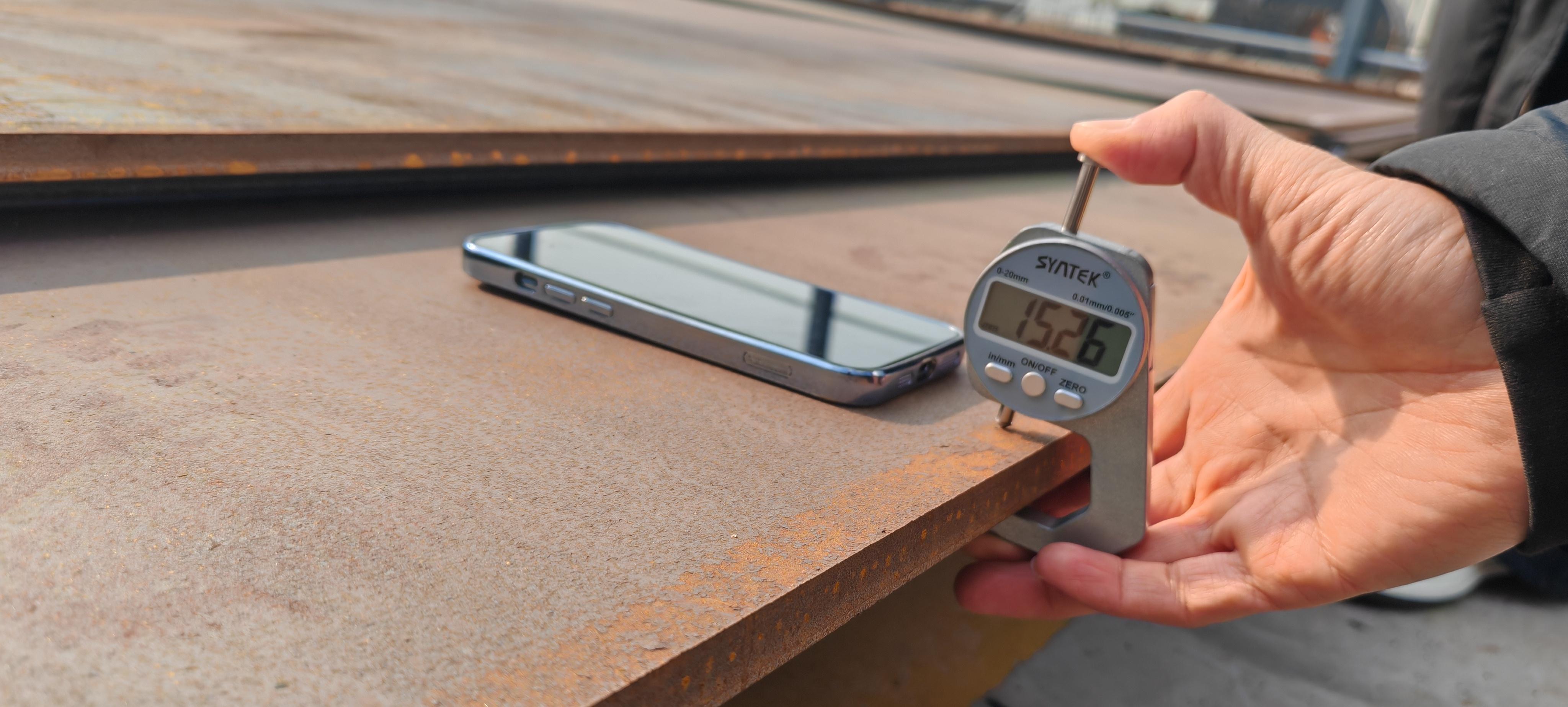
Inconsistent material quality is another quiet bottleneck. When plates arrive with surface defects, thickness variations, or questionable mill certs, your team spends extra hours on inspection, rework, or returns. That's not just a quality issue; it's a speed issue disguised as a material problem.
Relying on a source with limited inventory or a narrow size range forces you to compromise on design or wait for new production runs. A responsive supplier with deep stock and cutting capabilities can compress your timeline from weeks to days, turning steel plate supply from a constraint into a competitive advantage.
The Overlooked Variable That Decides Whether a Weld Holds
Most welders obsess over amperage, travel speed, and filler metal choice, but the real make-or-break factor often hides in plain sight: joint fit-up. A gap that's a millimeter too wide or a root face slightly uneven changes the entire thermal balance of the weld pool. You can have the perfect machine settings, yet if the two pieces don't meet with consistent contact and alignment, the arc will wander, penetration will vary, and the finished bead will carry hidden stress risers. Experienced hands don't just eyeball the fit before striking an arc—they test it with feeler gauges, adjust with tacks, and know that a tight, predictable joint forgives a multitude of other minor sins.
Then there's interpass temperature, the variable nobody talks about until a weld fails a bend test. On thick sections or multi-pass welds, letting the steel cool too much between passes creates hard, brittle microstructures at the toe of each bead. Conversely, running too hot softens the heat-affected zone and can lead to undercut or slag inclusions. The best weld inspectors carry infrared thermometers not because the code demands it, but because they've seen too many otherwise beautiful welds crack days later from thermal shock. It's not glamorous, but controlling the cooling rate—often with a simple rosebud torch or by adjusting the pause between passes—turns a gamble into a repeatable procedure.
Finally, consider the base metal's surface condition beyond the obvious rust and mill scale. Residual oils from machining, anti-spatter sprays, even the invisible film from a gloved hand can introduce hydrogen into the weld pool. That hydrogen migrates to the grain boundaries and waits for stress to arrive, then pops the weld like a zipper. Wire brushing alone won't cut it; a proper wipe with acetone and a dedicated stainless brush for the material type is the cheap insurance most shops skip. The overlooked variable isn't one single trick—it's the habit of treating every invisible input as a potential failure point, and that mindset separates welds that merely look good from welds that hold when it matters.
Real Load Paths, Real Plates: How We Match Steel to Stress
Instead of treating every plate as interchangeable stock, our process starts with the actual force map from the structure. We trace tensile, compressive, and shear paths through the connection zones, then assign plate grades and thicknesses where the stress demands them—not where convenience would put them.
That means a gusset in a brace frame might get a through-thickness rated plate because out-of-plane pull is the real failure risk, while a column base plate sees a thicker drop but no exotic chemistry. The match comes from working stress, not from generic minimums.
The cuts and weld prep follow the same logic. If a load enters at an angle, we orient the plate so its rolling direction and beveled edge sit in line with that path. This reduces local stress risers and lets the steel behave the way the mill intended.
No Guesswork in the Warehouse: What Every Batch Number Tells You
Walk into any well-run warehouse and you’ll see batch numbers printed on cartons, drums, and pallets. They’re easy to overlook, but each one is a compact record of where a product came from and what happened to it before it reached the shelf. Instead of hoping that a shipment is still within its shelf life or guessing which supplier shipped a particular lot, staff can read the batch number and know exactly which production run it belongs to. That single line of digits removes the need for memory, assumption, or frantic phone calls to the plant.
A typical batch number might encode the date of manufacture, the line or shift that produced the goods, and sometimes the raw material lot that went into the mix. When a quality issue arises, this becomes a fast path to containment: you pull only the affected batches instead of clearing entire sections of the warehouse. It also makes rotation simpler—older batches get shipped first, not because someone remembers to check dates, but because the batch number makes the age obvious at a glance. The result is fewer expired items sitting in the back and fewer returns from customers who received stale stock.
Beyond the daily routine, batch numbers turn audits and traceability exercises from a paperwork nightmare into a straightforward lookup. Rather than digging through shipping logs or trying to match vague descriptions, you follow the batch number backward to the source. This builds a clearer picture of how goods move through your facility and gives you the confidence to answer questions from regulators or clients without hesitation. In short, the batch number is the warehouse’s quiet translator—it turns a jumble of boxes into a readable story, one lot at a time.
From First Cut to Final Inspection: Support You Can Actually Reach
You do not get a generic account manager who disappears after the quote. From the first cut on a new part to that last pass with a micrometer, there is a named person on the other end who knows your material, your tolerances, and your deadlines. That means when something looks off at 4:30 on a Friday, you are not waiting until Monday for an answer.
That support does not stop once the job leaves the floor. If a finish is not laying down the way it should or a weld needs a second look, you can pick up the phone and talk to someone who was actually in the shop when your parts were running. No ticket roulette, no outsourced call center reading from a script.
And because the same team tracks your order through final inspection, any hiccup gets flagged early, not after shipping. You get photos, measurements, and a straight answer about what changed and what comes next. That is the difference between a supplier and a partner you do not have to chase.
FAQ
Look for a supplier that carries plates with yield strengths from 100 ksi up to 130 ksi or more, and has a track record of handling thick sections without delamination or weld cracking. Their mill sources should be consistent, and they need to understand how heat input and cooling rates affect the heat-affected zone in heavy fabrications.
For low-temperature toughness, normalized or quenched-and-tempered grades like ASTM A516 Grade 70, A537 Class 2, or EN 10025-6 S690QL are commonly specified. I tend to favor S690QL for heavy welded structures because it holds Charpy impact values well at -40°F while still being workable with proper preheat.
They should perform ultrasonic testing to catch internal discontinuities before cutting, control interpass temperatures during welding, and run procedure qualification records that match the actual thickness and joint design. Post-weld heat treatment may be needed for some grades, but it has to be coordinated with the steel's tempering temperature to avoid losing strength.
Not really. Higher strength typically means reduced ductility and greater sensitivity to hydrogen cracking. You need press brakes with enough tonnage for the bend radius, low-hydrogen welding consumables, and often preheat. Shops that treat these plates like mild steel usually end up with cracked welds or distorted parts.
Heavy mining equipment, bridge girders, pressure vessels, offshore platforms, and crane booms come to mind. Anything where dead weight matters but you can't afford to sacrifice load capacity. Using a 130 ksi plate instead of 50 ksi can cut plate thickness by more than half, but design details like buckling and fatigue need to be rechecked.
Always ask for mill test reports that show heat number, chemical composition, yield and tensile strength, elongation, and Charpy impact results. For critical applications, independent third-party testing from a sample cut from the same plate is worth the cost. I've seen cases where certificates looked fine but the plate hardness was all over the map.
Choosing the highest strength grade without considering weldability, ignoring plate flatness tolerances, and assuming all suppliers have the same level of internal quality. Also, some buyers focus only on price per ton and forget about delivery reliability or the supplier's ability to provide technical support during weld procedure development.
Ask about their incoming inspection, material traceability, and whether they have in-house ultrasonic testing or use an accredited lab. A good supplier should be able to supply plates with documented impact tests at the required temperature and offer cutting services that minimize residual stress. They should also be willing to share their rejection rate and how they handle non-conforming material.
Conclusion
When a high strength steel plate carries more than a calculated load, structural integrity means the plate behaves predictably after the mill cert is filed away. Many fabricators discover too late that a plate's yield strength on paper doesn't survive the torch, the fit-up gap, or a less-than-ideal weld sequence. We treat integrity as a chain from heat chemistry and rolling practice to the plate's actual response under a real load path. That's why we reject the habit of shipping generic plate and letting the shop sort out surprises. If your current source slows you down with mixed heats, inconsistent flatness, or mill test reports that arrive days after the steel, the problem isn't the spec—it's the supplier's shortcuts.
The often overlooked variable in heavy fabrication is weldability under restraint. Two plates with identical tensile numbers can behave completely differently once a multi-pass weld shrinks against them. We match steel to stress by examining the full load path, not just the maximum moment. Every batch number we ship tells you the exact heat, rolling direction, and tested toughness, so your warehouse staff never has to guess which plate goes where. And from first cut to final inspection, you can reach an engineer who knows the difference between a mill tolerance and a field problem. That support is what turns a plate order into a reliable structural system.
Contact Us
Contact Person: Zoey
Email: [email protected]
Tel/WhatsApp: +86 15865577002
Website: https://www.sanhesteels.com