Elastic Band Company: Your Trusted Source for Custom Elastic Bands and Stretch Materials
2026-09-16
If you've ever had an elastic band snap mid-project, you know the frustration. Custom stretch materials aren't all created equal, and most suppliers treat them as an afterthought. YONGFENG takes a different approach—focusing on precision, durability, and actual performance. This guide dives into what makes a reliable elastic band partner and how to spot the difference before it costs you.
From Inches to Tension: Specifying Elastic That Actually Fits
Cutting elastic to the same inch measurement doesn’t guarantee the same fit. Two strips labeled 10 inches can behave completely differently once they’re under load, because what actually matters is how much force it takes to stretch them and whether they return to shape afterward. A soft, high-stretch elastic might sit comfortably but offer little support; a firmer one with the same relaxed length can dig in even if the pattern calls for identical dimensions. That’s why specifying tension, not just length, changes the outcome.
Start by measuring the range of motion the finished piece must handle: a waistband might need to expand from a relaxed 28 inches to over 40 to clear the hips, then settle back to a snug but not restrictive tension at the natural waist. Instead of giving a supplier only a cut length, provide the free length plus the target force at a specific elongation—say, 2.5 pounds at 50 percent stretch. Also ask for recovery data after repeated cycling. Elastics that lose more than a few percent of their original length after a few dozen stretches will sag or shift over time. The right spec pairs a realistic inch count with the tension and recovery values that keep the fit stable from first wear to last.
Why Your Elastic Band Fails After Washing (And What to Specify Instead)
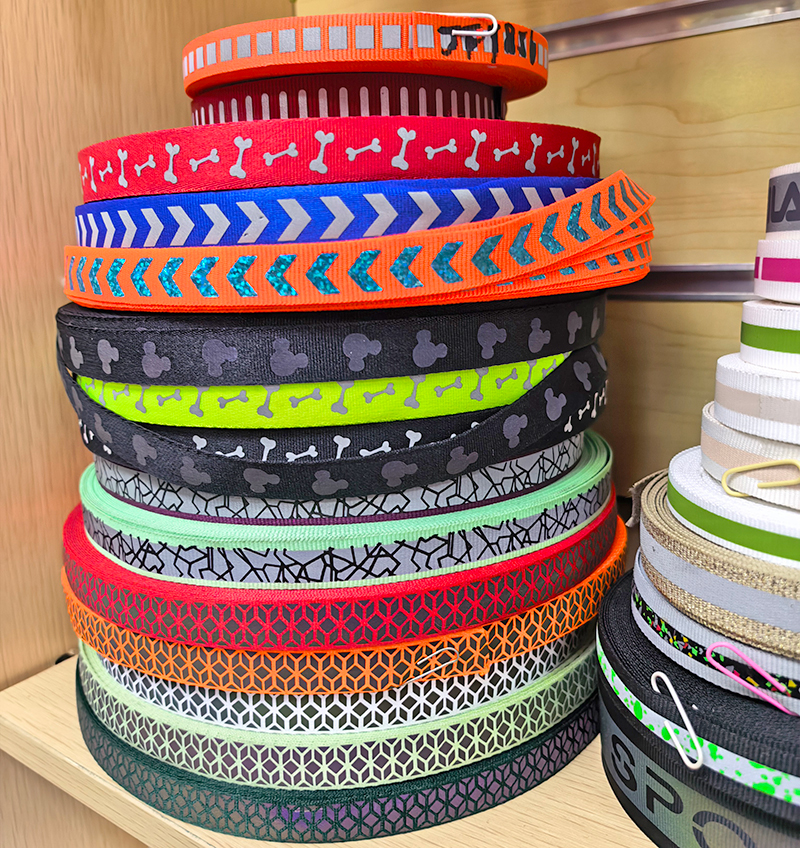
Most people assume elastic is indestructible — until waistbands sag, cuffs go limp, and fitted sheets refuse to stay put. The real culprit isn't the washing machine's agitation cycle or the dryer's heat. It's the rubber core inside the elastic, which breaks down when it meets water, detergent, and repeated stretching. Natural rubber latex is especially vulnerable; it oxidizes and loses its snap after just a few wash cycles. Synthetic alternatives like spandex or polyester-blend elastics hold up longer, but even they degrade if the wrong fiber content or construction is specified for a garment meant to be washed regularly.
The failure usually starts invisibly. Water penetrates the outer yarn wrapping, causing the inner rubber threads to swell and weaken. Then the dryer's heat accelerates the chemical breakdown, leaving you with a band that looks fine but has lost all recovery. To avoid this, spec elastic made from high-quality synthetic rubber or polyurethane with a woven or knitted cover that resists moisture. Look for terms like "chlorine-resistant," "heat-set," or "wash-tested to 50 cycles" instead of vague claims. And always request a sample that has been through an actual home laundry simulation, not just a lab swatch.
The better move is to specify elastic by end-use performance, not just width and stretch ratio. For swimwear, choose elastic rated for saltwater and UV exposure. For underwear and activewear, demand a narrow woven elastic with a soft hand and high modulus. And for bedding, opt for a braided elastic with a polyester core — it won't lose tension even after dozens of hot washes. Yes, it costs a bit more upfront, but replacing saggy elastics or dealing with customer returns costs far more in the long run.
The Hidden Cost of Off-the-Shelf Elastic Bands
Buying elastic bands by the box from a generic supplier feels like a smart move—until you start counting the ones that snap on first stretch, or the batches that arrive thinner than the last order. That cheap per-unit price quietly hides the labor spent re-threading, re-packaging, or apologizing to a customer whose product just unraveled in their hands.
The real drain shows up in downtime. A sewing line stalls while someone hunts for a replacement band that actually matches the sample. Warehouses stock three different “identical” lots because the vendor’s tolerance drifts with every shipment. Over a quarter, those small pauses and rework loops eat more money than a premium roll of consistent, tested elastic ever would.
Worse, the hidden cost can land squarely on your reputation. A garment that loses its stretch after two washes or a package that bursts in transit doesn’t trigger a refund request—it triggers a silent switch to a competitor. Off-the-shelf bands might keep the invoice low today, but the trust they cost you tomorrow doesn’t show up on any balance sheet until it’s already gone.
Custom Stretch Materials for Medical Wearables Without the Red Tape
Sourcing off-the-shelf stretch textiles for wearable medical prototypes often means settling for generic spandex blends that irritate skin or fall apart after repeated wash cycles. We work directly with compounders to dial in elongation, recovery, and moisture transport without triggering a full regulatory review. That means you can test a working electrode patch or a compression sleeve in days, not quarters.
The usual path forces you through lengthy material qualification documents even for small-batch runs. There is a better route: custom knits and films that meet ISO 10993 cytotoxicity and skin irritation benchmarks while staying flexible enough for joints and limbs. We keep the chain short—formulation, extrusion, knitting, lamination—so you can iterate without waiting on external approvals.
Think of it as having a bench chemist and a textile engineer on call. Need a substrate that stretches 180% but returns to shape after 10,000 cycles? A silicone-based adhesive that breathes and still holds to sweaty skin? These are specs we can hit with a handful of internal trials, no stack of forms attached.
Elastic That Doesn't Dig In: Comfort Engineering Basics
The secret to stretch that never bites starts with the raw material. Instead of standard rubber-based elastics, many comfortable designs now use silicone-infused or warp-knit stretch fibers that hold their shape without needing a tight squeeze. These materials have a softer recovery curve—meaning they bounce back from stretching without pulling harder against your skin. When you pair that with a wider band profile, the pressure spreads over a larger area, so you never feel that sharp line of compression around your waist or thighs.
Edge finishing makes a bigger difference than most people realize. A raw cut edge or a thin fold-over hem can concentrate tension in a narrow line, which is what causes red marks and irritation. Better designs use a seamless, laser-cut edge or a flat, turned-and-stitched hem that follows the body's contour. Some add a soft silicone bead on the inside just to keep the garment in place, but that bead is designed to rest against the skin without gripping—it stabilizes rather than constricts.
Placement matters as much as the elastic itself. Well-engineered comfort waistbands and leg openings are positioned to sit on areas with natural curves, like the natural waist or just below the hip bone, rather than on moving joints or fleshy zones that expand when you sit. This way, the elastic never has to fight your body's daily changes. Combined with a low-modulus stretch that moves with you, the result feels almost like a second skin—supportive where needed, invisible where it counts.
How We Match Dye, Width, and Recovery to Your Product Specs
We start with the dye because that’s what your customer sees first. Our color team works from physical swatches, Pantone references, or even a photo you send over, then builds a lab dip in small batches. We don't stop at a single match under store lighting—we check it under daylight, warm LED, and cool fluorescent so the shade holds up wherever the finished product ends up. Once you approve, the formula gets locked into our system so every future batch reads within a Delta E of 0.8 or less.
Width sounds simple until a fabric arrives half an inch too narrow and wrecks your cutting marker. We control width at the finishing stage, using a combination of tenter frame settings and tension adjustments while the fabric is still heat-sensitive. Each production lot gets measured at three points across the roll, and we log the results against your tolerance band. If you need a non-standard width like 61 inches instead of 60, we can adjust the greige knitting parameters before dyeing so you're not stretching or compressing anything later.
Recovery is the one that separates decent fabric from fabric that bags out after a month of wear. We choose the spandex or elastane count based on the stretch percentage you're targeting, then run a cyclic stretch test on the finished fabric—usually 5 to 10 cycles at 80% extension—and measure how much of the original shape comes back. If the recovery is below your spec, we don't ship it; we go back and tweak the yarn blend or heat-set temperature until the numbers land where they need to.
FAQ
We make everything from flat and round cords to specialized medical and sport elastics, and we can dial in widths, colors, and stretch levels to your exact specs.
Yes, we can match custom colors and source specialty stretch materials. Send us a sample or Pantone reference and we'll take it from there.
Depending on the product line, smaller prototype or niche runs are possible. We'll be upfront about minimums before you commit to anything.
It depends on complexity and quantity, but once your design is locked we'll give you a realistic production schedule you can plan around.
Every batch goes through stretch-recovery and tensile testing so the bands hold up under real-world use, not just on paper.
Absolutely. We can print your logo, add custom labels, and even set up retail-ready packaging if you need it.
We work with apparel, medical, sporting goods, packaging, and promotional product companies, plus plenty of one-off custom projects.
We're used to problem projects. Share a sketch or sample, and our engineers will figure out if it's doable.
Conclusion
Getting elastic right means moving past a simple width and length. At Elastic Band Company, we work from the tension curve and recovery behavior, not just a tape measure. When a band feels too tight after one wash or loses its grip after twenty, the problem is usually a mismatch between the fiber, weave, and intended stretch. We help you specify a band that holds its modulus through laundering, abrasion, and body heat. Off-the-shelf stock may look cheaper, but repeated returns, field failures, and dead inventory add a hidden tax you never see on the invoice. We remove that by matching dye lot, selvedge, and rebound to your exact production specs.
That same attention carries into medical wearables, where comfort and compliance depend on a band that stays put without digging into skin. We engineer edges with low peak pressure and distribute tension evenly so a monitor or brace feels like it belongs. Whether you need a soft knit for a compression sleeve or a firm woven for an orthopedic strap, we tune width, thickness, and recovery point by point. The result is a stretch material that behaves the same on day one and day one hundred, in every unit you run. That is the difference between buying elastic and building a component your product can rely on.
Contact Us
Contact Person: Mr Deng
Email: [email protected]
Tel/WhatsApp: +86-18926872657
Website: https://www.uniyongfeng.com/