
High Frequency External Concrete Vibrator Manufacturer Guide to Choosing Reliable Equipment
2026-10-26
Concrete doesn't wait for anyone. The moment it starts to set, your external vibrators either deliver the high-frequency force needed for full consolidation—or you're left with voids, cold joints, and a finish that screams 'redo.' Yet ask around and 'reliable' turns out to be the most abused word in manufacturer brochures. This guide skips the sales fluff to show you what actually separates a high frequency external concrete vibrator that holds up job after job from one that dies mid-pour. We'll cover the specs that matter, the failure points most buyers miss, and why teams who make the switch to Guangling stop shopping around.
What Actually Matters in Vibrator Specs Beyond the Marketing Hype
A spec sheet full of RPM numbers and 'whisper quiet' claims won't tell you how a vibrator actually feels. The real test is whether the motor keeps its rumbly, low-frequency vibration when pressed firmly against skin. Cheap motors spin fast in the air but stall or turn buzzy under pressure, leaving you with that numb, itchy feeling on the surface instead of deep stimulation. If the brand won't describe the motor's torque or how it behaves under load, you're probably paying for packaging, not performance.
Battery life is rarely as straightforward as the box claims. A large mAh rating means nothing if the motor draws power inefficiently. What you want is a standard USB-C charging port that works with cables you already own, plus a charging time under two hours. For waterproofing, don't fall for 'splashproof' language: IPX7 means you can safely take it into the bath, while IPX6 only handles a quick rinse. If you never plan to use it near water, that rating is just another line item to ignore.
Material quality goes deeper than body-safe silicone. The hardness of the silicone matters just as much — too soft and it flops around, too hard and it feels like a cheap plastic toy. Check the seam where the silicone meets the base; that's the first place water and bacteria sneak in. As for controls, skip the forty pattern modes. You want an intensity adjustment you can operate without looking, ideally a button or dial that responds to pressure, so you're not fumbling through blinking lights mid-use.
Matching the Vibrator to the Formwork, Not the Other Way Around
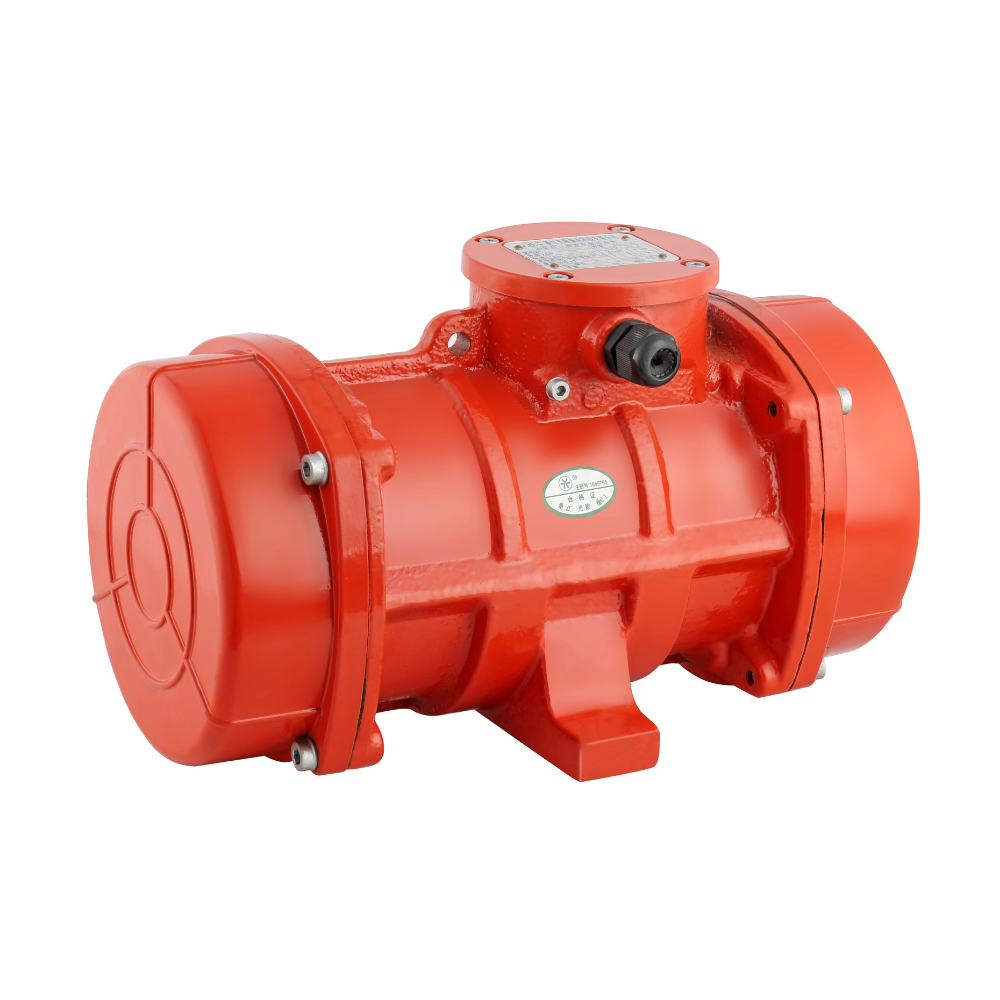
When setting up a pour, many crews grab whatever vibrator is on hand and then try to make the formwork accommodate it. That's backwards. The form is the fixed element—its shape, stiffness, and tie spacing dictate how concrete moves and what kind of consolidation it needs. Choosing the vibrator first leads to awkward access points, uneven compaction, or even form damage from a head that's too large or a frequency that's too aggressive.
A better approach starts with the formwork's design. Look at the narrowest sections, the reinforcement density, and the tie pattern. If the wall is thin and heavily reinforced, a smaller-diameter head with a higher frequency makes sense. If the form is rigid and the pour is deep, a larger head with lower frequency might move more concrete per pass without shaking the form apart. The vibrator's radius of influence should match the spacing of the form ties and the reachable depth from the top or through access ports.
This doesn't mean buying a different vibrator for every job. It means maintaining a small range of heads and shafts, and choosing based on the formwork, not habit. Wet concrete doesn't care what you prefer; it responds to the energy delivered in the right places. A quick check of the form before the pour can save hours of patching later.
Why Housing Material and Sealing Decide How Long It Lasts
The lifespan of any outdoor or industrial device often comes down to two things: what the housing is made of and how well it keeps the outside world out. A plastic shell might look identical to a metal one on day one, but a few seasons of UV exposure, temperature swings, and rain will quickly reveal the difference. Aluminum and stainless steel hold up far better than untreated polymers, which can become brittle or warp. That is why you see higher-end gear using die-cast aluminum or marine-grade alloys even when it costs more.
Sealing is the quiet factor that people rarely inspect until something fails. A housing can be built from the best material, but if water creeps in through a poorly fitted gasket or condensation has no way to drain, corrosion starts from the inside. Silicone or EPDM rubber seals, properly compressed during assembly, make a big difference. Even the screw holes and cable entry points need careful design — a single unsealed opening will let moisture, dust, and salt air in, shortening the life of every component inside.
In practice, these two choices work together. A tough housing with an IP67 or IP68 rating means nothing if the seal degrades after a few thermal cycles. Conversely, a perfect gasket cannot save a shell that cracks under mechanical stress or turns yellow and brittle in sunlight. When you compare products that have been in the field for years, the ones still working reliably usually combine corrosion-resistant materials with redundant sealing and proper venting.
Reading Between the Lines of Manufacturer Support and Spare Parts
Manufacturers often paint a rosy picture of support and spare parts availability, but the fine print tells a different story. A warranty that promises years of coverage can quietly exclude the exact components most prone to failure, leaving you with a machine that works on paper but not in practice. The same goes for spare parts: a brand might boast a global supply network, yet the part you need is backordered for months because it's only produced in limited batches. Learning to ask pointed questions before purchase—like which specific parts are warehoused locally and what the real turnaround time is for critical replacements—can save you from being stranded.
Another layer often overlooked is how manufacturers treat older models. Support tends to dry up faster than advertised once a new version hits the market. You might discover that a controller board for a three-year-old unit now costs more than the machine's resale value, or that firmware updates are silently discontinued. This isn't always deliberate malice; it's the economics of production shifting to current lines. But for a buyer, that means checking not just whether spare parts exist today, but whether the manufacturer has a track record of keeping them available for a realistic lifespan. A few extra minutes reading service bulletins and user forums can reveal patterns that glossy brochures never mention.
The smartest approach is to treat manufacturer support as a negotiation point rather than a given. Ask for a written commitment on spare parts retention—some industrial brands will extend it if you push. Look beyond the headline warranty to what's excluded: consumables, wear items, and software-linked components are common gaps. And don't assume that a bigger brand equals better support; sometimes smaller, niche manufacturers hold parts longer because their product cycles are slower. Ultimately, reading between the lines means accepting that support is a living thing—it changes with company strategy, supply chain shifts, and even mergers. Your job is to find out how solid that support actually is before you sign the check, not after the first breakdown.
Noise, Power Draw, and Other Site-level Details That Get Overlooked
When planning a new data center or colocation deployment, it's easy to focus on the headline numbers: total square footage, available megawatts, and carrier counts. But once the lease is signed and the racks start filling up, a handful of quieter factors can quietly shape the daily reality of operations. Noise levels, for instance, rarely appear on a spec sheet. Walk through a fully loaded hall, though, and the constant hum of fans, chillers, and backup generators becomes a physical presence. It affects how technicians communicate, how long they can comfortably work in a hot aisle, and even whether nearby office spaces need extra soundproofing.
Power draw is another detail that gets far less attention during site selection than it deserves. A facility might advertise 10 kW per rack, but real-world loads fluctuate with workload patterns, refresh cycles, and cooling overhead. The gap between nameplate capacity and actual delivered power can surprise tenants who assume every watt they pay for is usable. Smart operators look beyond the number on the door and ask about breaker coordination, UPS efficiency curves, and whether the facility has a history of tripping under peak load. Those are the details that turn a good site into a headache six months in.
Other overlooked site-level details include things like loading dock accessibility, vibration from nearby rail lines, and the quality of the local water supply for evaporative cooling. None of these show up in a typical RFP response. Yet together, they shape how smoothly a buildout goes and how much unplanned downtime you tolerate. A site with a tight freight elevator or a shared generator that gets tested every Tuesday at 6 a.m. can erode the best-laid capacity plan. The best way to surface these issues is to spend time on site during different shifts, talk to the facilities team, and ask specific questions about past incidents rather than relying on marketing collateral.
Separating Proven Track Records from Polished Sales Pitches
A glossy pitch deck rarely tells you what happens when the market turns. The real test is whether the numbers hold up against independently verifiable sources. Ask for audited statements, client retention data over multiple years, and specific examples of how the team performed during a downturn—not just the best twelve months they could cherry-pick.
References are only useful if they go beyond the curated list. Request to speak with a client who ended the engagement or scaled back the contract. Their reasons for leaving, and how the provider responded, reveal far more than a testimonial from a satisfied flagship account. Also compare the claimed results with industry benchmarks; a truly exceptional record will withstand that side-by-side look without needing clever framing.
Finally, ignore adjectives and look for evidence trails. Words like “proprietary,” “unique,” or “battle-tested” are sales language until they are tied to dated documents, transaction logs, or third-party verification. A proven track record answers the follow-up question; a polished pitch tries to move past it. Your job is to keep asking until the substance separates itself from the shine.
FAQ
Check whether the manufacturer builds units with cast aluminum or ductile iron housings, since those materials handle job site abuse better than thin stamped steel. Also ask about the eccentric weight design and whether the motor is rated for continuous duty. A manufacturer that publishes vibration frequency and centrifugal force data instead of hiding behind vague specs tends to be more trustworthy.
Look at the nameplate or data sheet for a frequency rating between 8,000 and 12,000 vibrations per minute. Anything lower works more like a standard vibrator and won't move low slump concrete as effectively. If the supplier cannot tell you the exact VPM and amplitude, that's a red flag.
Focus on sealed bearings, thermal overload protection, and a mounting base that spreads vibration evenly rather than concentrating it at a single point. Quick release clamps and heavy duty power cords also reduce downtime on busy pours. These details matter more than a shiny paint job.
External vibrators clamp to the formwork and shake the entire mold, which works well for precast, pipes, and thin wall sections. Internal vibrators go directly into the wet concrete and suit thicker slabs or columns. For high frequency external units, you're buying form vibration that compacts without leaving voids along the surface.
Blow out concrete dust after each use and inspect the mounting bolts weekly, since loose bolts concentrate stress and crack the housing. Grease the bearings only if the manual calls for it, because over greasing can push out seals. Store the unit off damp ground and run it briefly every few months if it sits unused.
It often determines whether a vibrator lasts two years or ten. Ask if the manufacturer stocks spare eccentric weights, bearings, and mounting hardware. A company that offers a real warranty and answers repair questions directly instead of routing you through a call center will save you money when a pour is already scheduled.
Yes, the clamp must match the formwork thickness and not rely on friction alone. Wedge type clamps handle vibration better than simple bolts. Check that the vibrator's mounting plate distributes force across at least two ribs or stiffeners on the form, otherwise you will crack the mold or lose consolidation energy.
Conclusion
A vibrator's headline specs rarely tell you how it will behave on your pour. Centrifugal force and frequency ratings are useful only after you confirm the unit's clamp spacing and mounting footprint match your formwork ribs and stiffener layout. A high-output model bolted to a light steel form will shake itself loose, while an undersized unit on bulky precast molds just idles. Look at the housing before anything else: a pressure-cast aluminum body with a proper O-ring seal and an IP65 rating will survive concrete slurry and daily knocks far longer than a thin cast shell. Also check that the bearings are shielded and the eccentric assembly is balanced, because that's where early failures hide.
Beyond the unit itself, ask the manufacturer how they handle a motor burn-out on day 400, not day 30. Do they stock armatures, bearings, and mounting wedges locally, or will you wait six weeks for a container from overseas? Site-level details matter too: a unit drawing 9 amps per head may trip a contractor's temporary panel when you run six vibrators on one circuit. Noise at 85 dB for ten hours is not the same as 78 dB. Finally, ask for a list of three ongoing projects using the same model, then call the site foreman. That conversation will tell you more about real durability than any polished brochure or spec sheet.
Contact Us
Contact Person: ZHUO
Email: [email protected]
Tel/WhatsApp: 86-576-86320988
Website: https://www.cnguangling.com