
Mesh Office Chair Sourcing: A Practical Guide to Finding Reliable Suppliers
2026-10-16
Finding a mesh office chair supplier is easy. Finding one that won't waste your time or compromise your orders? That takes a sharper approach. Most buyers learn this the hard way—after a sample that looks nothing like the photo, or a quote that balloons after the deposit. This guide cuts through that mess. We'll show you how to spot the warning signs early and why brands like OFCJNS keep coming up as a reference point for consistent quality. Read on if you'd rather make decisions than excuses.
Define the exact mesh back, frame, and base specs before contacting any supplier
Before you reach out to any supplier, lock down the precise measurements and material choices for the mesh, frame, and base. Specify the mesh opening size, wire diameter, and weave pattern, and decide whether you need epoxy coating or stainless steel. For the frame, note the exact tube dimensions, wall thickness, and corner joinery method. The base must include its footprint, height, and any leveling feet or anchor points. This level of detail prevents back-and-forth emails and ensures every quote you receive is comparable.
Write these specs as a single sheet with clear tolerances, such as plus or minus 2 mm on frame width and a maximum 1% open area variance for the mesh. If your product will sit outdoors, include a salt-spray test requirement for the coating. Suppliers often pad their pricing when specs are vague, so define whether the base will be welded, bolted, or cast. This forces manufacturers to quote against the same build standard.
One oversight to avoid: mixing metric and imperial units in the same document. Choose one system and stick with it for every dimension, including thread sizes and sheet thickness. Also state if you will accept substitute materials only with written approval. A tight spec sheet may take an extra hour to prepare, but it typically cuts sourcing time in half and reduces the risk of receiving samples that miss the mark.
Shortlist factories that specialize in ergonomic mesh seating, not general office furniture
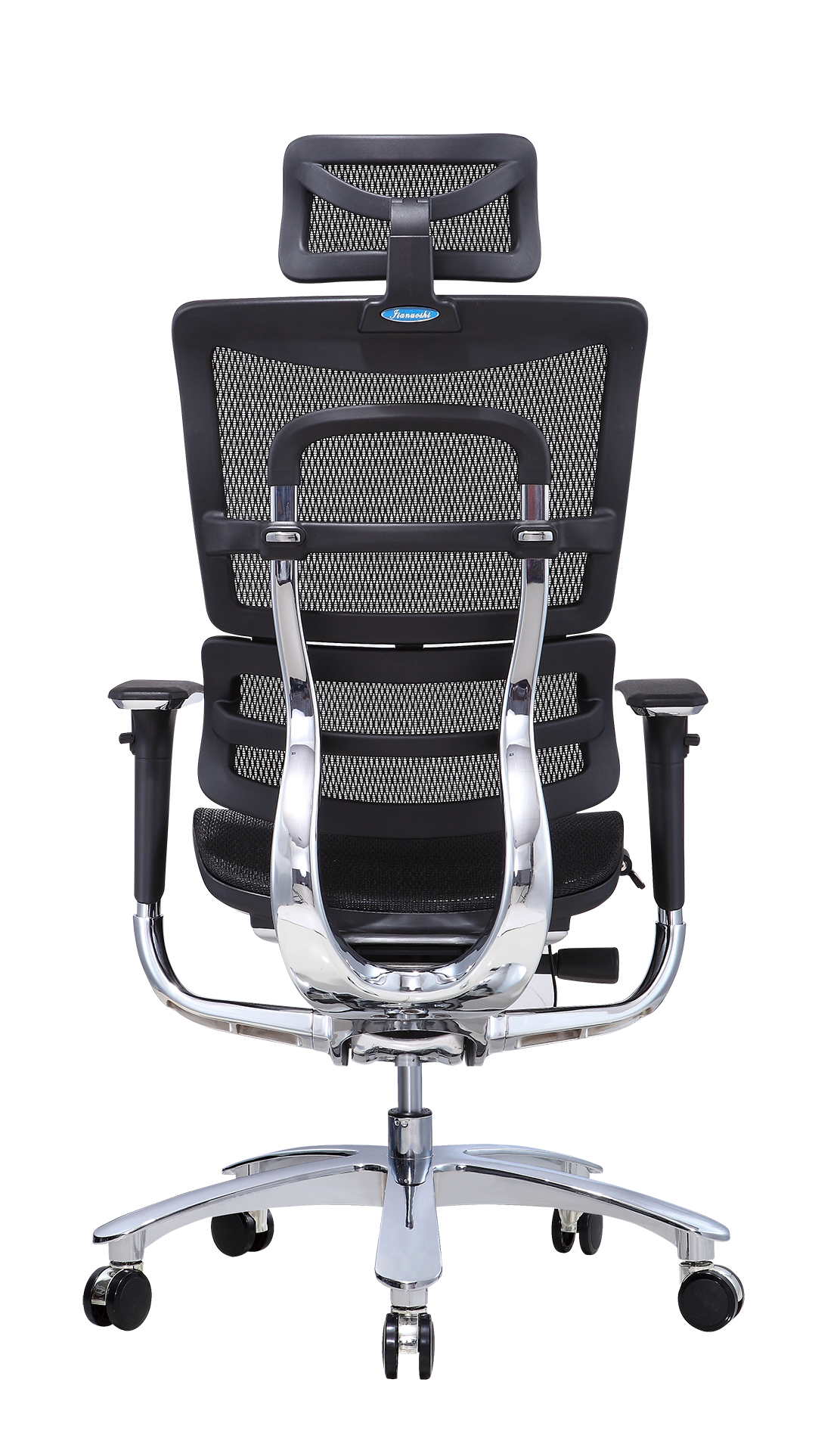
Most office furniture factories churn out desks and basic task chairs, but ergonomic mesh seating is a different beast entirely. The mesh tensioning process, the lumbar support mechanisms, the way the frame flexes with the user's back — these aren't things you can fake with a generic assembly line. When shortlisting suppliers, skip anyone who lists mesh chairs as just one item in a long catalog of unrelated products. Instead, look for factories that highlight mesh seating as a core competency, ideally with a dedicated production area or at least a separate team that handles only ergonomic chair projects.
A good sign is whether the factory has invested in specialized equipment like automatic mesh cutting and heat-pressing machines for seat pans and backrests. Many general furniture makers will outsource the mesh components and simply bolt them onto a standard frame, which often leads to sagging or poor posture support after a few months. Ask about their mold library for ergonomic chair frames: a factory serious about this niche will have dozens of frame molds for different body types and sitting postures, not just one or two generic shapes.
Finally, don't just rely on brochures. Visit the factory if possible, or request a live video tour of the mesh seating line. Check if they can provide test reports for dynamic load, mesh abrasion resistance, and lumbar fatigue — these are standard for genuine ergonomic seating. If the factory stumbles on these details or tries to steer you toward their cheaper non-mesh models, that's a clear signal to keep looking.
Verify supplier claims through production records, certifications, and floor-level evidence
A supplier’s own narrative only gets you so far. Pull the production logs for the specific batches tied to your orders and compare them against shipping manifests, inbound material receipts, and machine maintenance schedules. Mismatches in lot numbers, run times, or raw material origins often surface before you even step onto the floor.
Certifications matter, but they need context. Ask for the full audit report, not just the certificate. Check which facility and product lines were covered, when the last surveillance audit happened, and whether any non-conformities were raised and closed. A current ISO or industry certificate without underlying corrective action records can hide recurring issues.
Floor-level evidence closes the loop. Walk the production area during active shifts. Look for unlabeled chemicals, handwritten bypasses on jigs, or staging areas that don’t match your bill of materials. Interview operators away from supervisors. If the documented process says one thing and the floor does another, the supplier’s claims fail regardless of what’s on paper.
Run samples through daily-use simulations that expose weak mesh tension or wobbly armrests
Instead of relying on static spec sheets, we put every mesh back and armrest through a gauntlet of ordinary, repetitive motions. Testers of varying weights settle into the chair, shift side to side, and lean back hundreds of times a day. Within a week, weak mesh tension shows up as sagging near the front edge or a loss of rebound that you can feel immediately when you stand up.
Armrests get a separate but equally unforgiving routine. We grip them during sit-to-stand transitions, lean on one side while reaching for a phone, and apply downward force at the outermost corner—a common stress point that cheaper designs fail quickly. Any wobble, squeak, or lateral play gets logged, then traced back to the mounting bracket or adjustment mechanism.
The goal isn't to break the chair on purpose, but to find where daily wear will eventually show up first. Samples that pass get cleared for the next round of testing; those that don't go straight back to the design table with exact failure notes.
Agree on measurable quality thresholds before the first bulk order is confirmed
Vague promises like "good quality" fall apart the moment a shipment shows up with inconsistent welds or off-spec thickness. Before you sign off on that first bulk order, pin down thresholds that can be checked with a calibrated tool, not a gut feeling. For metal parts, that might mean surface roughness below Ra 1.6 µm, dimensional tolerance within ±0.1 mm on critical edges, and a maximum defect rate of 0.5% across any randomly sampled batch of 200 units.
Put these numbers into the purchase order or a one-page annex, and state exactly how they will be measured. If a supplier hesitates to commit to a rejection limit or pushes back on the sampling method, treat that as a warning sign. The goal is not to create friction but to remove ambiguity before money changes hands. Once both sides have signed off on measurable thresholds, incoming inspections become a simple pass/fail check instead of a drawn-out argument over what "acceptable" means.
Negotiate terms that protect long-term supply reliability instead of chasing the lowest quote
A buyer who fixates on the lowest number usually ends up signing away the very things that keep production lines moving. Suppliers under extreme price pressure will quietly trim quality, delay shipments, or deprioritize your orders when their capacity tightens. The real cost shows up months later as stockouts, emergency freight charges, or a frantic search for a replacement vendor who knows nothing about your specifications.
Smart negotiations start from a different question: what terms will keep this material flowing even when the market gets rough? That means locking in minimum order quantities that give the supplier enough margin to hold inventory for you, agreeing on lead-time guarantees with penalties for missed windows, and perhaps paying slightly more per unit in exchange for reserved production slots. A contract that spells out contingency sourcing, buffer stock obligations, and escalation procedures is worth far more than shaving another three percent off the invoice.
FAQ
Start with their material sourcing. Look for suppliers who use high-tensile mesh like DuPont or Matrex, and ask for batch test reports on tear strength and abrasion resistance. A supplier that can't explain where their mesh comes from usually cuts corners elsewhere.
Request a live video tour of their production floor. Ask to see the injection molding area for chair bases, the mesh cutting tables, and the assembly line. Trading companies rarely have this footage, and if they hesitate or show only stock photos, that's a red flag.
BIFMA X5.1 is the baseline for structural durability in the US market. For EU, look for EN 1335. Also check if the gas lift has a SGS or TÜV certificate. Don't get distracted by generic ISO 9001 claims; it's about the chair components, not just the factory paperwork.
Ask for a pre-production sample after tooling is finalized, not a prototype. Then order a small trial run of 50-100 units and inspect them randomly. Compare the mesh tension, frame welds, and caster quality against the approved sample. Write these specs into the purchase contract with a tolerance clause.
For a chair with adjustable lumbar support, 3D armrests, and a quality mesh back, expect around $45-$75 FOB for orders of 500+ units. Below $35 usually means thinner mesh, weaker bases, or no real warranty support. Above $90 and you're paying for brand licensing, not manufacturing cost.
It's a good filter. If a supplier only offers one or two fixed molds and says changes are too expensive, they may not be equipped for long-term partnership. Reliable factories usually have multiple mold options for seats, backs, and armrests, and can tweak mesh colors or base finishes without huge tooling fees.
Mix the order with at least 3 models, different mesh colors, and split between standard and high-back versions. Request drop-shipping to two different addresses if possible. This tests their inventory management, packing quality, and label handling—not just chair assembly.
Ask them to provide a written warranty policy for mesh tearing, gas lift failure, and caster breakage. Then ask what the claim process looks like: do they ship replacement parts free, do they require video proof, what's the response time? A real factory will have a parts warehouse and a clear RMA procedure; a trader will promise 'we'll handle it' without details.
Conclusion
Sourcing a dependable mesh office chair begins long before you send a single inquiry. You first need to lock down the precise mesh back tension, frame geometry, and base footprint that fit your users, because vague requests invite mismatched quotes and wasted samples. Instead of casting a wide net, focus on factories whose core work is ergonomic mesh seating—general office furniture makers rarely get the breathability and lumbar curve right. Once you have a shortlist, don't rely on glossy brochures. Ask for production run records, BIFMA or ANSI/BIFMA certifications, and live video or on-site walkthroughs that show actual welding, mesh cutting, and chair assembly lines. Then put samples through realistic abuse: repeated sit-stand cycles, prolonged backward leans, and side-to-side twisting to reveal weak mesh tension or wobbly armrests that spec sheets hide.
Before committing to a bulk order, agree on measurable quality thresholds—such as mesh deflection under load, armrest lateral play, and base swivel noise limits—so every shipment can be checked against the same yardstick. Finally, negotiate with long-term supply reliability in mind. A slightly higher unit price often buys you reserved production capacity, consistent raw material sourcing, and priority handling during peak seasons, whereas chasing the lowest quote can leave you with delayed containers and drifting quality. The guide's core lesson is simple: clear specs, specialized suppliers, verified floors, honest sample testing, and contract terms built around continuity will beat shortcut sourcing every time.
Contact Us
Contact Person: Diff Wang
Email: [email protected]
Tel/WhatsApp: +8613650281199
Website: https://www.ofcmeshchair.com/