

OEM HVAC Duct Protection Film Exporter: A Buyer’s Guide to Quality and Compliance
2026-09-18
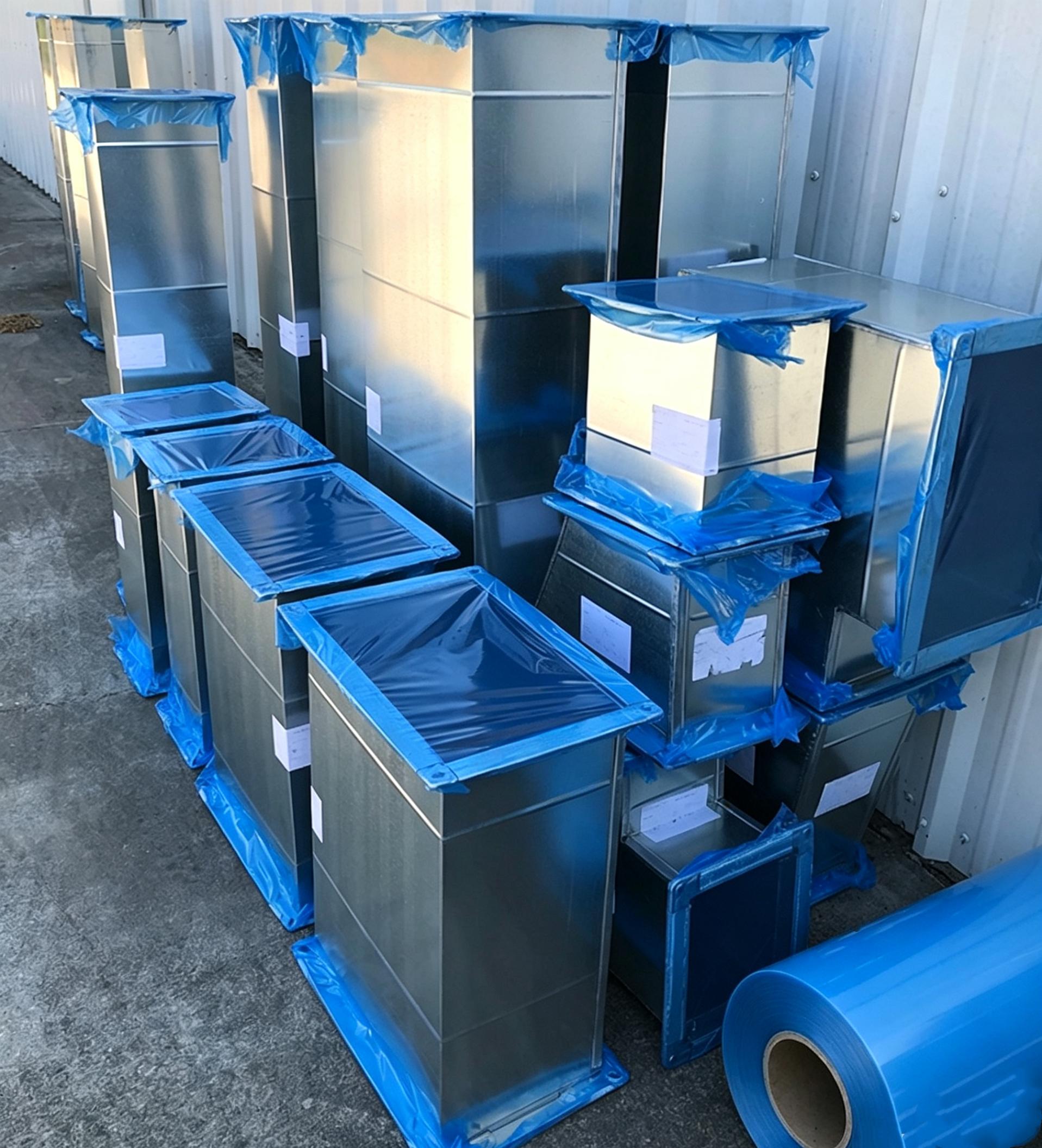
When sourcing OEM HVAC duct protection film, quality and compliance aren't just checkboxes—they're the difference between a clean installation and costly callbacks. This guide walks you through what to look for in an exporter, from material specs to regulatory standards. As a trusted partner in surface protection, Shire knows that every roll leaving the factory must meet exacting demands. Read on to make confident sourcing decisions.
Film That Doesn't Quit After the First Bend
Most thrillers treat the midpoint twist like a finish line, but this one treats it like a starting gun. Just when you think the story has settled into a predictable groove, it yanks the wheel again—not for shock value, but because the characters' decisions keep opening trapdoors. The first big reveal is only the loosening of the knot; the real unspooling happens over the next hour, as loyalties invert and motives curdle in ways that feel earned rather than engineered.
What makes the film stick is that each new bend recontextualizes what came before. A throwaway glance in act one becomes a confession in act three. A casual lie balloons into the central wound. The pacing never lets you rest, but it also never cheats—the script plants every later twist in plain sight, trusting you to misread them. That's rare in a genre that too often confuses loud reversals with cleverness.
By the final scene, the movie has bent so many times that the straight line you thought you were on feels like a distant memory. Yet the ending doesn't collapse under its own cleverness. It lands on a quiet, bruising note that makes the whole ride feel less like a maze and more like a trap slowly closing. If you're tired of films that run out of nerve after the first curve, this one will keep you leaning forward until the credits hit.
The Certification Alphabet You Actually Need
The certification alphabet most people push is a trap: A+, BICSI, CCT, and a dozen others that no hiring manager actually scans for. The version you need is shorter and far more specific. Start with the heavy hitters that cross industries—AWS, PMP, CISSP, and maybe a cloud-adjacent one like Microsoft Azure or Google Cloud. These aren't just letters; they signal you can handle real infrastructure, real budgets, or real security incidents.
After that, fill in the gaps based on your lane. If you're in data, look at D and G: Databricks or GCP Professional Data Engineer. If you're in security, S and C do most of the work: Security+, CISSP, or CISA. And don't sleep on the non-technical letters—Six Sigma or Scrum can quietly boost a project management resume. The point isn't to collect the whole alphabet; it's to own the five or six letters that make your specific role easier to defend.
Thickness and Tack: Specs That Lie Silently
Thickness is often read as a single number from a datasheet, but that figure rarely tells you where the material actually sits between the caliper jaws. A 5-mil tape might have 3 mils of adhesive and 2 mils of film, or 2 mils of adhesive and 3 mils of film, and both are still called 5-mil. The distribution changes everything: bond line, conformability, even how the edge catches on a die-cut. Most spec sheets don't break that down, so two tapes with identical thickness can behave completely differently once they're pressed onto a rough or curved surface.
Tack is worse because it's a sensation disguised as a number. One lab might measure loop tack, another rolling ball, another probe tack, and each gives a different ranking for the same adhesive. A tape that feels aggressively sticky to a fingertip can have a low loop tack value, while a dead-feeling adhesive might score high on a slow probe pull. The word itself implies something immediate and intuitive, but the stated tack spec is just one narrow snapshot under one set of conditions, often chosen to flatter the product.
Where it really falls apart is when thickness and tack are used together to predict performance. People assume a thicker, tackier tape will hold better, but that ignores the substrate's surface energy, temperature, and dwell time. A thin tape with moderate tack can outperform a thicker, stickier one on powder-coated metal simply because the adhesive wets out more fully. The specs don't lie in the sense of being false; they just leave out the context that makes them true. Testing on your actual surface remains the only honest way to read them.
When Custom Widths Save Your Production Line
Most production slowdowns tied to material handling come down to one thing: the roll, sheet, or belt is not quite the right size. Standard widths force operators to trim, fold, or splice on the fly, and those manual fixes eat up minutes that add up over a shift.
With custom widths, the material arrives cut to your exact spec and drops straight into place. A beverage bottler running an unusual label height, for instance, stops fighting oversized film and starts every run with zero offcut waste. That change alone can recover a full hour of production per day.
The real payoff shows up in consistency. When every roll matches the machine’s actual dimensions, setup time shrinks, jams become rare, and quality checks come back clean. Custom widths are not just about convenience—they keep the line running instead of standing still.
Packaging That Protects More Than the Film
The box isn't just a container—it's the first line of defense against everything that could ruin a roll before it ever reaches a camera. Moisture, heat, light leaks, even the slow pressure of other objects in a bag: the right packaging keeps all of that at arm's length. We use rigid, double-wall card stock with a matte finish that resists fingerprints and scratches, so the surface stays clean from shelf to pocket to studio.
Inside, the film is sealed in a light-tight black cassette, then wrapped in a vapor-proof foil pouch. That pouch does the heavy lifting against humidity and temperature swings, the two things that quietly degrade emulsion long before you see any visible change. It's not glamorous, but it's the reason a roll bought today can sit on a shelf for two years and still deliver the look you expect.
We also think about how you handle it. The box opens with a perforated tear strip instead of a glued flap that shreds. The spool fits snugly but pulls free without forcing. Small things, but they add up to a package that treats the film inside like what it is: a light-sensitive record waiting for your eye.
Auditing Your Exporter Without Leaving Your Desk
Remote auditing turns your desk into a command center. Instead of booking flights and juggling time zones, you can pull up shipment photos, review live video from the factory floor, and cross-check production timelines against original purchase orders. The trick is to request granular evidence, like timestamped images of the exact batch numbers or real-time walkthroughs of the loading dock before dispatch. This shifts the burden of proof onto the exporter without triggering defensive pushback.
A practical desk audit often starts with a structured questionnaire that avoids yes-or-no traps. Ask for raw screenshots from their internal ERP or inventory system rather than polished summaries. Then layer in third-party data sources, such as port manifests or container tracking feeds, to spot discrepancies between what they claim and what actually moved. One overlooked tactic is to compare their reported production capacity against public utility bills or labor registrations, which quickly exposes inflated promises.
Finally, treat the remote audit as an ongoing conversation, not a one-off checklist. Schedule short, unannounced video calls at different production stages and watch for hesitation or scripted responses. Exporters who resist showing unedited warehouse corners or immediate lot samples often reveal more through their reluctance than through any document. The goal is to build enough layered evidence from afar that a physical visit becomes a formality rather than a necessity.
FAQ
Look beyond the sales pitch. Ask for samples with your specific width, thickness, and adhesive type, then test them on the actual duct material you use. A capable exporter will also walk you through their tooling process and past projects involving similar HVAC components, not just generic film rolls.
At minimum, request a RoHS and REACH declaration, plus a technical data sheet that lists tensile strength, elongation, and temperature resistance. If your ducts end up in regulated markets like the EU, ask for test reports from an independent lab—not just in-house certificates.
Release force and UV stability tend to fly under the radar. A film that sticks too aggressively can leave residue on galvanized steel, while one that degrades after a few weeks in sunlight will tear during removal. Always ask for a weathering test or real-world reference from a similar climate.
Thicker film does provide more puncture resistance, but it also becomes stiffer and harder to wrap around elbows and seams. Many buyers find 50–80 microns a good balance, but the ideal thickness depends on whether the ducts are stored indoors or exposed to construction traffic outdoors.
Request an aging test at elevated temperatures, not just a fresh peel test. Adhesives can change after 30 or 60 days of contact, especially on pre-painted or galvanized metal. Ask the exporter for a residue test after simulated storage, and specify your maximum acceptable haze or tack level.
Ask them about the specific surface finishes used in HVAC ducts—like galvanized, stainless, or painted steel—and how their film behaves on each. A knowledgeable exporter will mention differences in surface energy, potential corrosion risk from certain adhesives, and even recommend a different liner for high-humidity shipping routes.
Custom slit rolls or printed film can add 3–5 weeks beyond the standard production time, and ocean freight may require moisture-barrier packaging to prevent film blocking. Clarify whether the exporter uses humidity indicators or vacuum packing for long sea shipments, and confirm their warehouse capacity for partial shipments if your project phases demand it.
Conclusion
OEM HVAC duct protection film has to earn its place long before the first sheet is pulled. Low-cost films often crack or lift after a single sharp bend, leaving adhesive residue on finished ductwork. Ask the exporter for elongation and peel adhesion data across temperature ranges, not just a lab snapshot. The certifications that matter are less about glossy logos and more about substance: ISO 9001 for process control, REACH and RoHS for restricted substances, and, where relevant, a flame-spread test report tied to the film's actual composition. If the exporter cannot produce the full technical file, walk away.
Spec sheets frequently hide more than they reveal. A film listed at 50 microns may lose a third of its thickness at the edges, and tack values measured on steel do not reflect adhesion to galvanized or painted HVAC surfaces. Request a physical sample roll, not a cut sheet, and test it on your own duct material. Custom widths are not a luxury; they prevent inline slitting waste and keep production moving. Packaging deserves equal scrutiny: roll edges must be protected against crushing, and moisture barriers should be standard. Finally, auditing an exporter from your desk is practical. Use live video to walk the production floor, ask for real-time batch records, and match those batch numbers to shipped cartons. A compliant exporter will not hesitate.
Contact Us
Contact Person: Jack Xu
Email: [email protected]
Tel/WhatsApp: 8615257328825
Website: https://www.temporaryprotectivefilm.com/