

PVC Antistatic Flooring Solutions for Static Sensitive Environments
2026-09-14
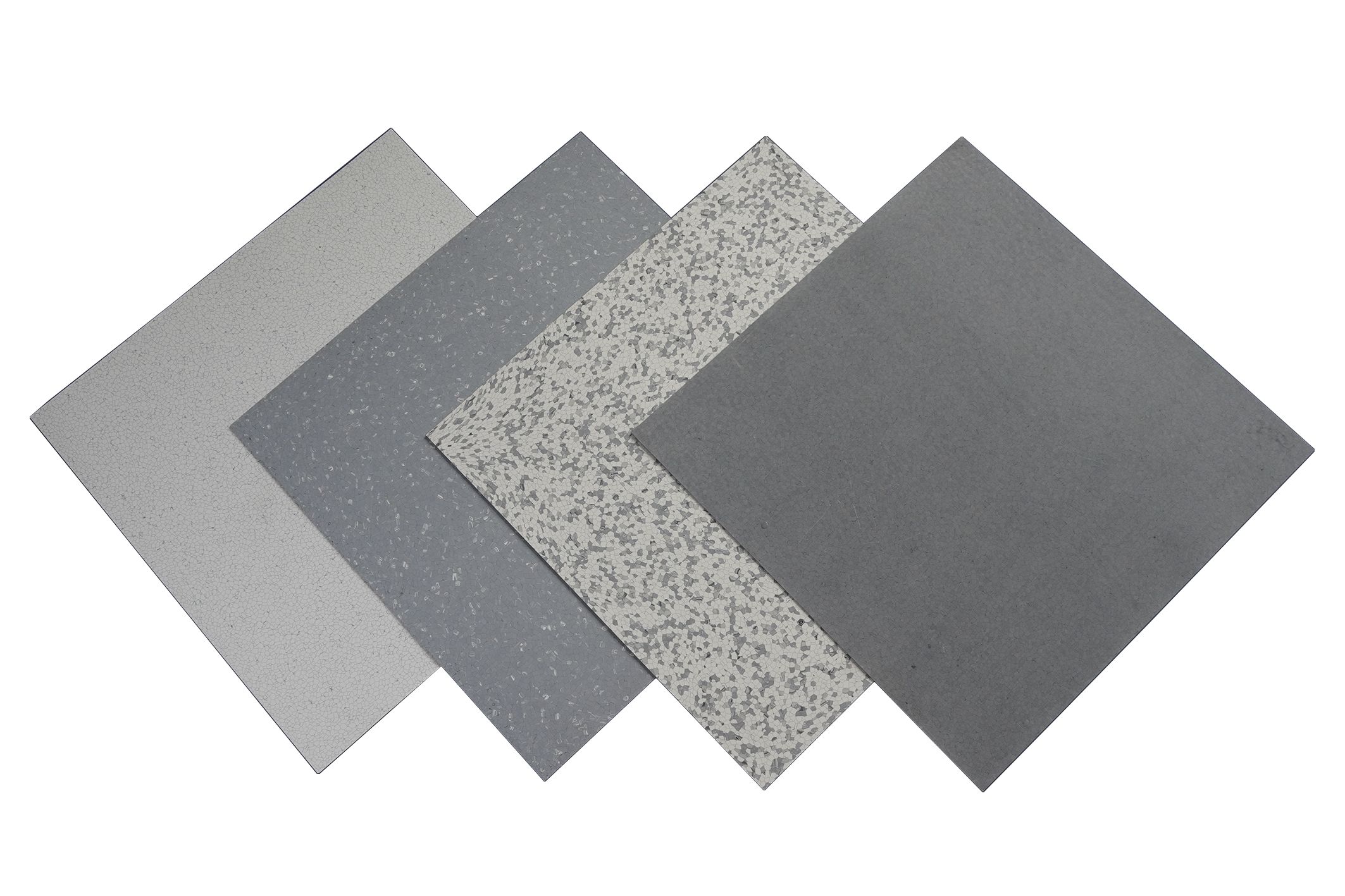
Static electricity rarely gives a warning. One wrong step across a standard vinyl floor can deliver a discharge strong enough to fry an IC, corrupt data, or ignite sensitive materials. For cleanrooms, electronics assembly, and chemical labs, the floor beneath your feet has to work just as hard as the equipment on the bench. That's the promise of PVC antistatic flooring solutions from Lipin Floor—and in this post, we'll break down how they actually perform in static-sensitive environments.
The Unseen Static Threat in Precision Workspaces
A single fingertip drifting toward an exposed circuit board can carry more destructive potential than a misplaced tool. In precision workspaces, static charges accumulate through the most mundane actions—rolling a chair, peeling tape, even walking across a polymer floor. These invisible voltages often go unnoticed until a component fails days later, long after the workstation has been cleaned and recalibrated.
The real danger lies in the gap between what operators feel and what sensitive devices endure. A discharge well below the threshold of human perception can still erase memory cells, degrade junction layers, or alter calibration data. Modern ionizers and grounding straps help, but they only work when they match the specific materials and movement patterns of the space. Overlooking the mundane sources of triboelectric charging means accepting a quiet kind of yield loss that no amount of final inspection can recover.
Dissipating Static Before It Reaches Your Instruments
Static buildup often starts long before you even power up your gear. Dry air, synthetic carpeting, and moving cables can all generate charge on your body or nearby surfaces. If that charge finds a path through a connected instrument, the sudden discharge can degrade sensitive inputs or corrupt low-level signals. The simplest fix is to give that energy a harmless exit before it ever reaches your equipment.
A grounded wrist strap or conductive mat works well when you handle circuit boards or internal connectors, but for everyday studio and field use you need broader protection. Anti-static floor mats, humidifiers keeping relative humidity around 40 to 60 percent, and grounded metal racks or chassis paths all help bleed off charge gradually. The goal is not to block every electron but to keep potential differences small enough that they never arc across a vulnerable input.
Once your workspace and cable routing are under control, check your instruments themselves. Many devices use chassis ground as the intended shield path, so a poor connection inside an XLR or TRS plug can turn a shielding layer into an antenna for stray fields. Tighten set screws, replace worn connectors, and verify that each cable's shield actually terminates to ground. When static has no inviting path into the signal chain, your gear stays quieter and lasts longer.
Comparing PVC to Other Antistatic Flooring Options
When flooring needs to handle electrostatic discharge, PVC often gets compared against epoxy coatings, rubber tiles, and raised access panels. Each material brings its own strengths. Epoxy delivers a seamless, chemical-resistant surface but demands careful substrate preparation and can crack if the slab shifts. Rubber offers superior comfort underfoot and sound absorption, yet it tends to cost more and can absorb spills if seams are not sealed properly. Raised panels provide excellent underfloor cabling access but involve a significantly higher initial investment and complex installation.
PVC antistatic flooring lands in a practical middle ground. It typically installs faster than epoxy, resists moisture better than many rubber options, and costs far less than a raised access floor. Its conductivity is achieved through embedded carbon or metallic particles, giving consistent surface resistivity without relying on a topical coating that wears away. Maintenance stays straightforward: regular sweeping and damp mopping with a neutral cleaner keep the static-dissipative properties intact for years.
The right choice depends heavily on the environment. In a heavy-traffic electronics assembly area, PVC sheet or tile holds up well and can be replaced section by section if damaged. In a pharmaceutical cleanroom where chemical washes are frequent, epoxy might still be preferred. For data centers needing constant cable rearrangements, raised flooring remains unmatched. But for projects balancing budget, installation speed, and reliable static control, PVC consistently proves itself as a versatile option that does not force compromises on safety or durability.
Installation Missteps That Undermine Performance
Most installation failures aren't caused by defective parts—they start with small, avoidable assembly errors. A bracket torqued by feel instead of a wrench may seem tight enough, but uneven clamping pressure distorts the mounting face and invites premature wear. On the flip side, over-tightening hardware is just as destructive, as it can crack housings or strip threads that are nearly impossible to repair on site.
Cable and connector routing is another area where good components get blamed for poor setup. Sharp bends near termination points, tightly bundled power and signal lines, or missing strain relief may not show up during a bench test, but vibration and thermal cycling will eventually turn those into intermittent faults. A loose connector pushed into place without an audible click often passes a quick visual check yet fails under load.
Clearance and thermal management oversights also quietly erode performance. Blocking a ventilation path with a nearby panel, applying thermal interface material too thick or too thin, or placing heat-sensitive parts downstream of an exhaust stream can cause throttling that isn't obvious until the system runs at full duty. These aren't exotic problems—they're the result of skipping a step or assuming that “close enough” will hold up over time.
Rooms That Cannot Afford a Single Discharge
Some rooms live under a strict zero-tolerance policy for static electricity. A single, barely audible snap from a fingertip can mean catastrophic failure. Semiconductor fabrication bays, magnetic resonance imaging suites, and explosive storage vaults all share this unforgiving trait. In these spaces, the invisible spark that most people never notice is treated like a lit match in a room full of gasoline.
The danger lies in the numbers. A person walking across a standard vinyl floor can build up 12,000 volts without feeling a thing. Yet sensitive microchips can be destroyed by as little as 30 volts. One discharge, lasting microseconds, can punch a microscopic hole through an oxide layer or scramble a patient's pacemaker reading. Explosive atmospheres are even less forgiving: a single spark can trigger a chain reaction that no sprinkler system can stop.
To keep these rooms operational, every surface becomes part of a quiet defense network. Conductive flooring bleeds charge away before it accumulates. Ionizers flood the air with balanced positive and negative ions, neutralizing static on insulating materials that cannot be grounded. Workers don heel straps and wrist bands, and humidity is held above 40 percent so moisture in the air helps dissipate charge. Even the clothing is woven with carbon threads. In a room that cannot afford a single discharge, the goal is not to survive a spark but to make sure one never has a chance to exist.
Keeping Resistance Low Year After Year
Electrical connections naturally degrade over time as oxidation, corrosion, and thermal cycling loosen contact surfaces. Without intervention, even well-designed joints can develop higher resistance, which leads to heat generation, energy loss, and potential failure. The key to stable performance is consistent, low-resistance contact maintained throughout the entire service life.
Effective designs use spring-loaded or pressure-based interfaces that compensate for material relaxation and micro-movement. High-quality plating, such as silver or nickel over copper, slows oxidation while maintaining conductivity. Periodic tightening or inspection is often unnecessary if the initial clamping force is properly engineered, but in harsh environments, simple maintenance practices can further extend low-resistance behavior.
By selecting materials with matching thermal expansion coefficients and incorporating redundant contact paths, systems resist gradual resistance creep. This proactive approach avoids the slow decline that causes hot spots and intermittent faults, keeping efficiency and safety intact year after year.
FAQ
PVC offers a good balance of static dissipation, chemical resistance, and comfort underfoot, and it is easier to patch or replace individual tiles when damaged. Epoxy can be harder to repair cleanly, while rubber may be less resistant to certain solvents used in production.
Carbon particles or metal-coated fibers embedded in the vinyl create a network that lowers surface resistance. When a person or cart touches the floor, the charge moves through that network to copper grounding strips and then to the building's earth connection.
Static-dissipative floors have surface resistance between 1 x 10^6 and 1 x 10^9 ohms, which slows the discharge to prevent sparks. Conductive floors are below 1 x 10^6 ohms and drain charges faster, often used where highly sensitive components or explosive atmospheres are present.
It is possible if the old floor is firmly bonded, level, and free of wax. However, any residual insulating layers can interfere with grounding, so the subfloor must be tested for conductivity and the adhesive must be compatible with both surfaces.
Use a microfiber mop with a diluted antistatic cleaner or pH-neutral detergent. Avoid oil-based cleaners, waxes, and polymer sealers that leave an insulating film. After cleaning, allow the floor to dry and periodically remeasure resistance at several points.
Unlike some older static-control materials, quality PVC antistatic flooring does not rely on moisture in the air to remain dissipative. It works consistently across a wide humidity range because the conductive elements are built into the material, not just applied as a topical treatment.
Yes, high-density PVC tiles with reinforced backing can handle carts, pallet jacks, and even light forklift traffic. Check the product's point load rating and indentation resistance to ensure it matches your equipment wheel type and load frequency.
Grounding strips, usually copper, must be placed in contact with the conductive layer at regular intervals and connected to a verified earth ground. A qualified electrician should confirm the building ground is within code, and the resistance from the floor surface to ground should be measured after installation.
Conclusion
Static buildup rarely announces itself until a delicate instrument fails or a data stream corrupts. In precision workspaces, that invisible threat is constant. PVC antistatic flooring tackles this by embedding a conductive matrix that routes the charge safely to ground before it ever reaches your equipment. When you stack PVC against other antistatic options—epoxy coatings, rubber tiles, or raised access floors—it consistently lands in a practical middle ground: lower material and labor costs than epoxy, easier replacement than rubber, and less structural complexity than raised systems, all while holding a tunable surface resistance for different industries.
But even the best material will underperform if the installation misses key steps. Using standard adhesive instead of conductive glue, skipping copper grounding strips, or leaving seams unsealed can turn a supposed safeguard into an insulating layer. For rooms that cannot afford a single discharge—semiconductor fabs, metrology labs, MRI suites, explosive-handling zones—every grounding detail is non-negotiable. Keeping resistance low year after year means more than an occasional mop; it requires removing insulative dust with antistatic cleaners, verifying grounding continuity each quarter, and logging surface resistance readings to catch drift before it becomes a failure.
Contact Us
Contact Person: yuki
Email: [email protected]
Tel/WhatsApp: +86 18664390732
Website: https://www.lipinfloor.com/