
Sewer Line Cleaning Machine Supplier in China: Your Trusted Source for Quality Equipment
2026-09-17
When a sewer line clogs, every minute of downtime drains your budget—and flimsy equipment only makes it worse. That’s exactly why professionals are choosing AMJET, a sewer line cleaning machine supplier in China known for durable, high-performance tools that handle roots, sludge, and scale without constant repairs. If you’re tired of machines that quit on the job, read on: this post breaks down what to look for in quality equipment and how AMJET sets the standard.
What a Decade of Field Repairs Taught Us About Build Quality
After ten years of fixing equipment in the field, the first thing we check isn’t the spec sheet—it’s how the housing comes apart. Machines with Phillips screws in recessed pockets, glued seams, or proprietary fasteners chew up time and patience. Build quality shows up in the details that don’t appear in marketing photos: captive screws, alignment pins, drain holes, and gaskets that seat without silicone goo. When a device can be opened with a single tool and reassembled without a torque chart, it usually survives longer in the real world.
The next lesson came from repeated failures at the same points. Cable entry ports were the usual suspects, followed by connectors that lacked strain relief and boards without conformal coating. We started preferring designs that routed wiring away from sharp edges, used compression glands instead of rubber grommets, and left a little slack inside the enclosure. Build quality is less about exotic materials and more about anticipating how dust, vibration, and moisture will attack the joints. The products that lasted a decade weren’t overbuilt—they were simply easier to service and harder to kill.
From Handheld Augers to Truck-Mounted Jetters: A Full Range
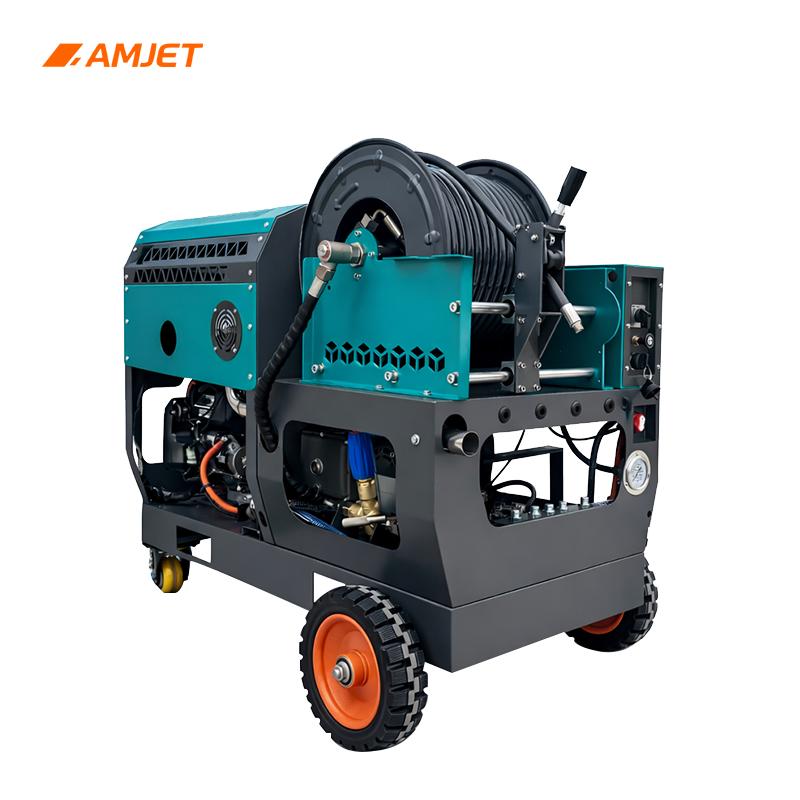
Plenty of suppliers claim to carry drain cleaning equipment, but most stop short once you get past the basic closet auger. A genuine inventory runs from palm-sized handheld augers that clear a bathroom sink trap to truck-mounted jetters capable of blasting through grease, roots, and scale in a 12-inch municipal main. That spread matters because no single machine handles every blockage. A hand auger will never touch a collapsed sewer line, while a trailer jetter is overkill — and often impossible to maneuver — for a lavatory drain under a pedestal sink.
In between those extremes, the real work happens. Handheld drill-style augers with auto-feed mechanisms take the effort out of clearing 1¼-inch to 2-inch lines. Push them up to 3-inch floor drains and you'll want a drum machine with enough torque to spin a ⅜-inch cable through turns and traps. For recurring grease in restaurant lines or root intrusion in older clay pipe, a mid-size sectional machine gives you the reach and cutting power to restore flow without digging. Then, when the line opens but keeps slowing down, a jetter with adjustable pressure — often 1,500 to 4,000 PSI — uses water volume, not just brute force, to scrub the pipe walls clean and carry debris downstream.
What tips the decision is usually line diameter, blockage type, and access. Handheld augers fit through a sink drain without pulling the trap; truck-mounted jetters need a cleanout or pull station within hose reach. That's why a range isn't just a catalog boast. It means you can match the machine to the job instead of forcing the wrong tool into a tight space or wasting an hour setting up equipment that's too big for the line. It also means the same supplier can support a service tech running three residential calls a day and a municipal crew clearing storm drains after a heavy rain.
Why We Test Every Reel Under 2,000 PSI Before It Ships
We don't trust a pressure rating printed on a spec sheet. Before any reel leaves our facility, it gets hooked up to a test bench and held at 2,000 PSI—not for a second or two, but long enough to expose the kind of slow leaks and weak seals that only show up under sustained load. It's a simple test, but it catches the subtle flaws that turn a great-looking reel into a paperweight.
That kind of pressure is far beyond what most reels will ever see in normal use, and that's the point. If a hose reel can shrug off 2,000 PSI without a hiss or a drop, it's not just surviving your jobsite—it's ready for the day someone accidentally deadheads a line, spikes the pressure, or pushes the system harder than the manual recommends. Testing at the edge means you never have to think about what happens at the middle.
Custom Fittings for Historic Pipes and Tight Manholes
Working with century-old sewer lines or cramped manhole chambers rarely leaves room for off-the-shelf parts. That's why we machine each fitting to match the actual bore, ovality, and thread pitch found on site—not just the nominal size on a faded blueprint. Lead-jointed cast iron, odd-angle ductile bends, or a manhole with barely 18 inches of clear space all get the same practical approach: measure twice, cut once, and build something that slides in without forcing.
We’ve seen plenty of cases where a standard tee or elbow simply won’t clear the existing pipe bell or the manhole wall. Our shop keeps a library of profiles from past rehab projects, so when a crew calls from a tight vault with a 1930s clay tile main, we can often pull a proven template before sending out a field tech. That saves a second trip and keeps the bypass pumping time down. Every fitting is pressure-tested after fabrication, whether it’s a simple straight reducer or a multi-port saddle with a custom drop connection.
The goal isn’t to make the old pipe look new. It’s to make the connection reliable without disturbing the surrounding structure. Small reveals, short engagement lengths, and field-adjustable flanges all help when the manhole opening is too tight for a standard spigot. If the existing pipe has non-standard threads or a broken bell, we can thread, clamp, or mechanical-joint around the damage rather than cutting out more of the wall. The result is a repair that fits the space, not a space that has to be rebuilt around the repair.
The 48-Hour Spare Parts Guarantee You Didn't Know You Needed
Most equipment suppliers treat spare parts like an afterthought—something that gets tossed on a slow boat whenever someone remembers. That delay quietly eats into your uptime, and you don't notice until a single missing seal brings an entire line to a halt. The difference with a 48-hour guarantee isn't just speed; it's the peace of knowing your critical wear items, filters, and sensors are already staged before you even place the order.
What makes this work is boring on purpose. We keep regional stock for the machines we support, log failure patterns from field data, and build kits around the parts that actually fail—not the ones that look impressive in a brochure. You get a plain cardboard box with exactly what you asked for, not a marketing folder and half a bolt kit. That unglamorous approach is why "didn't know you needed it" becomes "won't run without it" by the second unplanned outage.
How a Municipal Crew Cut Blockage Calls by 40%
The crew stopped chasing backups after they happened. Instead, they mapped every past blockage, cross-referenced pipe age and tree cover, then assigned points to the riskiest segments. Each week, two technicians ran camera inspections only on those high-score lines, cutting roots and clearing grease before complaints ever reached the office.
Within six months, emergency callouts dropped from 35 a month to 21. The change wasn't a new tool or bigger budget; it was scheduling work based on failure patterns rather than citizen reports. Residents noticed the quiet, even if they didn't know why their street stopped flooding.
FAQ
We cover the main categories: trailer-mounted jetters, compact electric drain cleaners, and truck-mounted units for larger municipal work. Each model is built to handle different pipe diameters, from 2-inch residential lines up to 36-inch storm drains.
Every machine goes through a pressure test on the pump, a full hose reel inspection, and a final run before packing. We also use branded components like Interpump or Udor, and our welding frames are powder-coated to resist corrosion.
Yes. You can choose the pump flow rate, hose length, reel drive type, and even the frame dimensions to fit a particular truck bed. We have built units for narrow European streets and high-temperature Middle Eastern environments.
We provide a detailed operation manual in English, video call support for installation and troubleshooting, and a one-year warranty on the pump and engine. Spare parts are stocked in our warehouse and can be shipped by air if you need them quickly.
Standard production takes 15 to 20 working days after deposit. For sea freight, we book with reliable carriers and provide all export documents. Air freight is available for urgent orders, but the cost is higher due to machine weight.
Yes, the truck-mounted jetters are designed for daily municipal use with continuous-duty gearboxes and heavy-duty hose reels. For industrial plants, we offer explosion-proof motors and stainless steel frames as options.
We own our assembly line instead of outsourcing to third-party workshops. That means we can control the welding quality, test every pump before it leaves, and keep lead times stable even during peak season.
Conclusion
A decade of field repairs taught us that build quality isn't a spec sheet item—it's what keeps crews from wasting afternoons on avoidable breakdowns. That's why our lineup runs from handheld augers to truck-mounted jetters, each machine assembled and checked as if it were going into our own fleet. Before any reel leaves the floor, it gets pressurized to 2,000 PSI and held there; if it weeps, it doesn't ship. We also machine custom fittings on request, because century-old pipes and cramped manholes don't care about standard dimensions.
Downtime has a cost, so we keep a 48-hour spare parts guarantee on critical components—no chasing backorders while a job sits idle. One municipal crew we worked with cut repeat blockage calls by 40% after switching to our jetting equipment, a number that says more about reliability than any brochure could. As a sewer line cleaning machine supplier in China, we earn trust the slow way: by testing hard, delivering fast, and building machines that stay out of the scrap pile.
Contact Us
Contact Person: Mike
Email: [email protected]
Tel/WhatsApp: +86 19545555505
Website: https://www.amjeting.com/