

Top 10 Silicon Carbide Ceramic Materials for High-Performance Applications
2026-10-09
From hypersonic nozzles to semiconductor wafer chucks, silicon carbide ceramics are quietly redefining what high-performance materials can endure. Yet not all SiC grades are created equal—and choosing the right one separates breakthrough designs from costly failures. In this guide, we cut through the noise to rank the top 10 silicon carbide ceramic materials that engineers actually rely on for extreme heat, wear, and corrosion. Along the way, you’ll see why teams working with demanding applications increasingly turn to HUAYI TECH for precision-engineered SiC solutions that hold up where standard ceramics fall short.
Why Silicon Carbide Outperforms Traditional Ceramics
Silicon carbide (SiC) doesn't just edge out traditional ceramics like alumina or zirconia—it operates in an entirely different league when the environment turns hostile. While conventional ceramics rely on tightly bound oxide structures that start to soften or lose integrity above 1000°C, SiC retains its mechanical strength and dimensional stability well past 1600°C. This isn't merely a marginal improvement; it's the difference between a component surviving a brief thermal spike and enduring sustained exposure inside a jet engine or a molten metal handling system.
The gap widens further under thermal shock. Traditional ceramics often crack or shatter when subjected to rapid temperature swings because their low thermal conductivity and high expansion create steep internal stress gradients. Silicon carbide flips that script: its thermal conductivity rivals that of some metals, pulling heat away from hot spots almost instantly, while its expansion coefficient stays remarkably low. The result is a material that can be quenched from glowing red heat into cold water without fracturing—something no conventional oxide ceramic can reliably claim.
Wear resistance tells the same story. Traditional ceramics are hard, yes, but SiC's hardness approaches that of diamond on the Mohs scale, and its covalent bonding resists abrasive erosion far longer. In slurry pumps, sandblasting nozzles, or mechanical seals exposed to gritty fluids, silicon carbide components routinely outlast alumina parts by five to ten times. That durability translates directly into fewer shutdowns, lower replacement costs, and the freedom to design equipment that simply couldn't survive with yesterday's ceramic materials.
Key Properties That Define High-Performance SiC
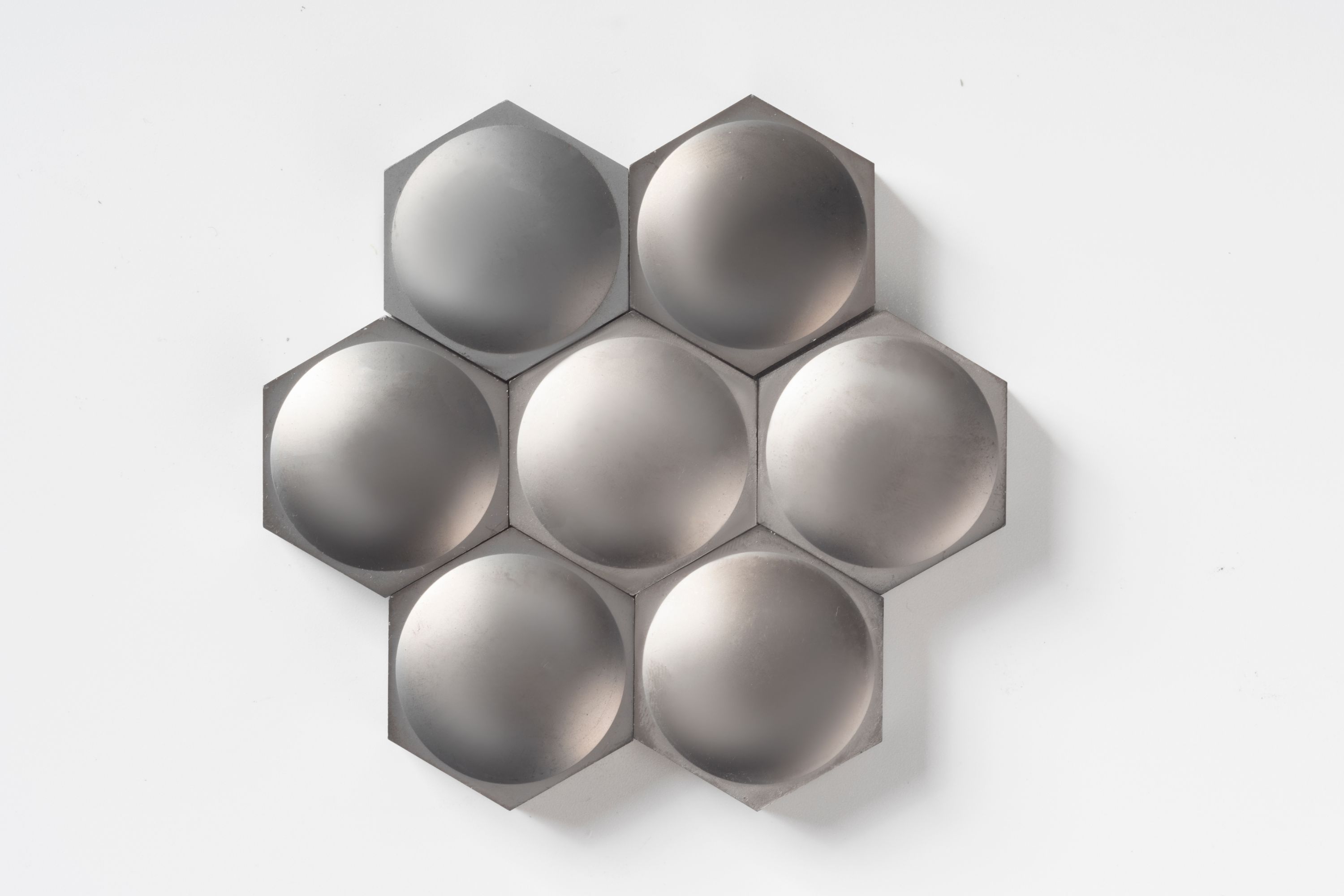
Silicon carbide earns its place in high-performance electronics through a combination of intrinsic material advantages that silicon simply cannot match. Its wide bandgap of roughly 3.26 electron volts—nearly three times that of silicon—allows devices to operate at substantially higher voltages, temperatures, and switching frequencies without breaking down. This translates directly into thinner drift regions for a given voltage rating, which slashes on-resistance and conduction losses. The high critical electric field strength, around ten times that of silicon, further enables smaller, faster, and more efficient power devices.
Thermal conductivity stands out as another decisive factor. SiC conducts heat roughly three times better than silicon, so heat generated during operation dissipates more readily. This reduces the need for bulky cooling systems and lets designers push power densities upward while keeping junction temperatures within safe limits. Combined with a high saturation drift velocity, which supports rapid carrier transit and minimal switching loss, SiC devices handle hard-switching topologies that would cripple conventional silicon MOSFETs or IGBTs.
Chemical inertness and mechanical hardness extend the performance envelope beyond pure electrical metrics. SiC resists oxidation and degradation at elevated temperatures, making it suitable for harsh environments such as aerospace, downhole drilling, and automotive under-hood electronics. Its stable behavior across a wide temperature range—from cryogenic conditions to several hundred degrees Celsius—means circuit protection and control can be integrated closer to the heat source, cutting system-level cost and improving reliability. These combined properties make SiC the material of choice when efficiency, compactness, and ruggedness are non-negotiable.
Leading Silicon Carbide Grades for Extreme Environments
The grades that actually hold up in extreme environments rarely make the front page of a datasheet. For most designs pushing past 200°C, high-purity semi-insulating 4H-SiC remains the only sane choice, mainly because its resistivity doesn't collapse when the junction temperature climbs. You'll want to check the micropipe density and basal plane dislocation count even if the vendor smiles and waves the certificate.
Conductive grades with nitrogen doping in the 10^18–10^19 cm^-3 range tend to survive better in power modules where thermal runaway is a real threat. The trick is not just low on-resistance at room temperature but how flat the mobility stays when the case hits 175°C or the radiation dose starts piling up. Some older 6H-SiC polytypes still show up in optoelectronics, but for anything involving high electric fields, 4H is the only polytype that doesn't quietly degrade after a few thousand hours.
Another underrated factor is the epi layer quality. A substrate can pass every incoming inspection and still produce devices that fail under repetitive avalanche stress if the epi growth introduced stacking faults. For extreme environments, I'd rather take a slightly higher on-resistance grade with a proven epi process than a lower Rds(on) part that hasn't been pushed through thermal shock and high-humidity reverse bias.
How SiC Enhances Efficiency in Power Electronics
Silicon carbide's wide bandgap roughly triples the energy needed to push electrons into conduction compared with silicon. That sounds like a drawback until you look at the knock-on effects in a switching converter: a higher critical field allows much thinner drift regions for the same voltage rating, which slashes on-state resistance. The result is less heat generated from conduction losses, especially in 650 V to 3.3 kV designs where silicon IGBTs and MOSFETs struggle with bulky, lossy structures.
Switching behavior changes even more. SiC devices reverse-bias recovery charge is a fraction of what silicon diodes and body diodes exhibit, so turn-on and turn-off transients settle faster and dissipate less energy per cycle. In practice, a 20 kHz silicon IGBT bridge might see half its losses vanish when replaced by SiC MOSFETs running at 50 kHz or higher. That frequency headroom shrinks magnetics and capacitors, cutting size and copper loss while keeping the same output ripple.
Thermal performance also shifts the design calculus. With junction ratings above 175°C and thermal conductivity close to three times that of silicon, SiC dies spread heat more evenly and tolerate higher ambient temperatures. This allows passive cooling in applications where silicon forced air, shrinking heatsinks and fan power. The combined effect is not just a few percentage points: converters often see a 30–50% drop in total losses at the system level, which directly translates into longer runtimes, smaller enclosures, and lower energy bills over the product's life.
Choosing the Right SiC Material for Aerospace Demands
Selecting the right silicon carbide (SiC) variant for aerospace applications requires a careful look at how the material behaves under extreme thermal cycling, high-frequency vibration, and prolonged exposure to ionizing radiation. Unlike standard industrial grades, aerospace-grade SiC often demands tighter control over grain boundary phases and dopant distribution, since even minor inconsistencies can lead to premature crack initiation in turbine hot-section components or satellite power electronics. Engineers frequently weigh the trade-offs between sintered, reaction-bonded, and chemical vapor deposited SiC, each offering distinct advantages in fracture toughness, thermal conductivity, and ease of net-shape fabrication.
Another layer of consideration involves the operating environment's chemical aggressiveness. For re-entry vehicle leading edges or thruster nozzles, oxidation resistance at temperatures above 1600°C becomes non-negotiable, pushing designers toward high-purity CVD SiC with minimal residual silicon. In contrast, structural brackets or mirror substrates for space telescopes may prioritize dimensional stability and low coefficient of thermal expansion over extreme thermal shock resistance, making a silicon-infiltrated composite more attractive due to its machinability and lower cost.
Finally, qualification testing itself shapes material selection. Aerospace programs rely on statistical databases of Weibull modulus, slow crack growth parameters, and creep rupture data that are often scarce for niche SiC grades. This scarcity forces teams to either fund extensive characterization campaigns or stick with heritage materials that have flown before, even if a newer formulation offers better theoretical performance. Balancing proven reliability against potential weight savings or higher operating temperatures remains a central tension in choosing SiC for next-generation aerospace platforms.
Future Innovations in Silicon Carbide Ceramic Technology
Electric field-assisted sintering is shifting from a laboratory curiosity to a production tool, particularly for near-net-shape SiC parts with internal cooling channels. By pulsing current through the powder compact, densification happens in minutes instead of hours, preserving fine microstructures that conventional hot pressing would coarsen. This opens the door for turbine blades and heat exchangers that combine thin walls, sharp corners, and embedded passages without post-machining.
Toughness, long the Achilles' heel of silicon carbide, is being attacked through multilayered architectures. Alternating dense SiC layers with thin interlayers of hexagonal boron nitride or MAX-phase compounds forces cracks to deflect repeatedly, boosting work of fracture by an order of magnitude. At the same time, in-situ grown SiC nanowires inside the matrix act as microscopic reinforcing bars, improving thermal shock resistance enough for hypersonic leading edges and reusable rocket nozzles.
For power electronics and space nuclear systems, the next leap will come from tailored interfaces rather than bulk chemistry. Coating SiC substrates with diamond or boron nitride nanotubes can raise thermal conductivity well past 400 W/m·K while maintaining dielectric strength. Meanwhile, irradiation-stable oxide scales doped with rare-earth silicates are being designed to self-heal microcracks at 1500°C, helping SiC cladding survive decades inside advanced fission and fusion reactors.
FAQ
Reaction-bonded SiC and sintered SiC both excel here, but the nod often goes to sintered SiC for its higher density and uniform microstructure. It sheds heat quickly thanks to its high thermal conductivity and barely expands when temperatures swing, which prevents cracking in turbine shrouds and leading edges.
Reaction-bonded SiC can be molded into near-net shapes with a lower firing temperature, so complex seal rings are cheaper to produce and still resist most chemicals. Sintered SiC, by contrast, gives you a fully dense body with higher hardness and better wear life, but it is more difficult to machine and costs more up front.
Silicon carbide carries heat away much faster than alumina, which prevents hot spots on wafers and reduces particle contamination. It also stays dimensionally stable through rapid heating and cooling cycles, so end effectors and vacuum chucks hold their flatness far longer in etch and deposition tools.
For heavy slurry and abrasive conditions, sintered SiC sits at the top because its high density and hardness deliver the longest service life. Reaction-bonded SiC follows closely and wins on cost for large, complex liners. Hot-pressed SiC is excellent but usually reserved for small, high-value inserts due to its price.
Recrystallized SiC has an open porous structure that gives it outstanding resistance to thermal shock, so it can survive rapid kiln cycles without cracking. It also maintains load-bearing strength at temperatures above 1600°C, which lets kiln cars and beams support heavy ceramic ware without sagging.
Reaction-bonded SiC is often the sweet spot because it stops high-velocity projectiles effectively while keeping production costs manageable through near-net shaping. Hot-pressed SiC offers slightly better multi-hit performance, but the price jump only makes sense for specialized vehicle or aircraft armor where weight savings are critical.
SiC/SiC composites retain strength at very high temperatures and do not react aggressively with steam, which eliminates the hydrogen explosion risk seen with zirconium. They also have low neutron absorption and excellent radiation damage tolerance, though the main barrier remains cost-effective joining and sealing of the composite tubes.
Plasma etch chambers for advanced semiconductor nodes need coatings that resist fluorine and chlorine attack without shedding particles, and CVD SiC delivers that with very low impurity levels. Optical mirrors for space telescopes and high-energy laser systems are also adopting it because the coating can be polished to an ultra-smooth finish while remaining thermally stable.
Conclusion
Silicon carbide ceramics have moved beyond niche laboratory curiosities into the backbone of demanding engineering systems, and the current top ten grades reflect a careful balance of purity, sintering method, and microstructural control. Unlike alumina or zirconia, SiC retains strength at temperatures where metals soften and traditional ceramics lose toughness. Its combination of high thermal conductivity, low thermal expansion, and extreme hardness allows designers to replace heavier, less durable components in semiconductor processing, nuclear fuel cladding, and advanced armor. Grades such as reaction-bonded, sintered, and CVD SiC each serve distinct roles: reaction-bonded versions offer near-net-shape complexity, sintered variants deliver high density and wear resistance, while CVD SiC provides unmatched purity for optics and electronic substrates. The diversity among the leading materials means selection is rarely about finding a single "best" grade, but rather matching the material's defect population and grain boundary chemistry to the specific failure modes of the application.
In power electronics, SiC substrates have already cut switching losses dramatically, enabling smaller heat sinks and higher frequency operation in inverters for electric vehicles and grid storage. The same intrinsic properties translate to aerospace: hot-section components, mirror substrates, and heat exchangers benefit from SiC's dimensional stability under thermal cycling. Emerging innovations focus not only on refining existing grades but on additive manufacturing of complex SiC geometries, high-purity fibers, and composite architectures that combine toughness with oxidation resistance. As the next generation of reactors, satellites, and high-voltage systems pushes material limits, the ranking of top SiC ceramics will increasingly favor grades with reproducible properties, lower embodied energy, and compatibility with automated production lines. The real differentiator is now process control and long-term reliability data, not just raw thermal or mechanical numbers.
Contact Us
Contact Person: Junting Leo
Email: [email protected]
Tel/WhatsApp: +86 18615009766
Website: https://www.huayimaterial-china.com/