
Top FRP Skin Lite Refrigerated Truck Body from China for Your Cold Chain Needs
2026-10-21
Reefer bodies are usually either light or durable—rarely both. That's exactly why the FRP skin lite refrigerated truck body from China is turning heads in cold chain logistics. At Whole Chain Tech, the focus isn't on cutting corners; it's on cutting weight from the right places so your payload and fuel budget stay healthier. Here's what makes this build different and why it might be the upgrade your fleet has been waiting for.
Why FRP Skin Lite Panels Outlast Standard Fiberglass in Cold Storage
Cold storage rooms subject wall panels to a brutal cycle of condensation, freezing, and thawing. Standard fiberglass absorbs that moisture through tiny surface voids and cut edges, which then freezes and expands, slowly prying the layers apart. FRP Skin Lite panels resist this because their surface is far less porous, keeping water out of the core and preventing the frost-driven delamination that eventually ruins ordinary panels.
Low temperatures also make standard fiberglass stiff and prone to cracking when hit by a pallet or cart. Skin Lite panels are formulated to stay slightly more ductile in sub-zero conditions, so they bend under impact instead of shattering. That difference alone can add years to a panel's life in a busy freezer where bumps and scrapes are unavoidable.
Cleaning chemicals and frequent washdowns take another toll. Conventional fiberglass often develops hairline fissures where sanitizers linger and break down the resin. Skin Lite panels have a smoother, harder finish that sheds moisture and resists chemical penetration, which means they don't just survive cold storage—they keep looking and performing like new long after standard panels would need replacing.
Weight Savings That Let You Carry More Payload Without Overstressing the Chassis
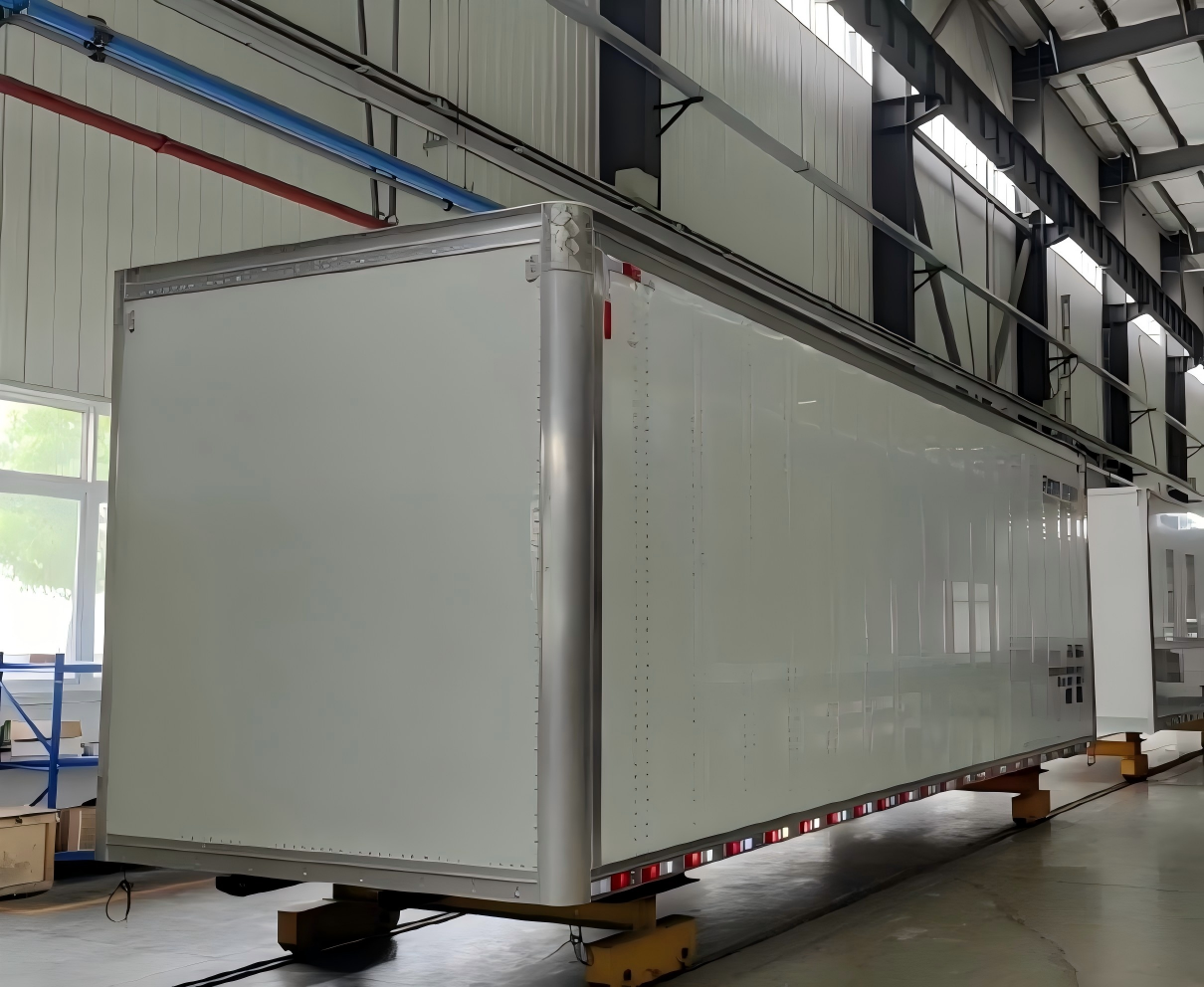
Cutting weight from the chassis isn’t about hitting an impressive figure for marketing. It directly shifts the ratio between what the structure weighs and what it can carry. When the frame, suspension arms, and mounting hardware weigh less, the same gross vehicle weight rating leaves more room for actual cargo. More importantly, the chassis is no longer constantly loaded near its fatigue threshold just by its own components. That headroom lets you add payload without pushing stress cycles into the range where cracks and premature wear start.
The key is selective material replacement, not simply making everything thinner. Swapping solid steel brackets for high-strength aluminum forgings, or using composite crossmembers in non-critical positions, removes mass where it isn’t needed. The remaining steel sections then work at a lower baseline stress. With a full load, you’re less likely to feel the rear end squat, the brakes complain on long descents, or the steering get vague. In day-to-day use, that means the chassis holds its alignment and ride quality long after a heavier setup would be showing signs of strain.
How Chinese Fabricators Handle Panel Bonding, Foam Injection, and Moisture Barriers
In many Chinese fabrication shops, panel bonding is treated less as a generic assembly step and more as a craft tuned to the specific materials at hand. Workers often rely on polyurethane reactive adhesives that cure quickly under controlled humidity, paired with mechanical fasteners or spot welds to hold alignment while the bond sets. Instead of a single standard process, you'll see a mix of techniques depending on whether the panel is steel, aluminum, or composite—some lines use automated dispensing robots with vision systems, while smaller workshops still prefer manual application guided by jigs that get recalibrated after every batch.
Foam injection follows a similar logic of adaptation. Closed-cell polyurethane foam is the workhorse for insulation and structural stiffening, but the injection parameters vary widely. Fabricators adjust the mixing ratio, shot size, and cure time based on ambient temperature and the cavity geometry. One common trick is to pre-heat the metal skins slightly before injecting so the foam rises more evenly and doesn't create voids near the edges. Quality checks often involve drilling small inspection holes in non-critical areas or using thermal imaging to spot uneven density, rather than relying on theoretical calculations alone.
Moisture barriers are where Chinese fabricators tend to be particularly pragmatic. Instead of a single membrane solution, they combine multiple layers: a butyl-based sealant along joints, a flexible EPDM gasket under mechanical fasteners, and sometimes a spray-on acrylic coating for large flat areas. The real difference is in the detailing—corners get extra attention with hand-applied patches, and drain channels are designed so any trapped water has a path out rather than being completely sealed in. Many shops have moved away from relying solely on adhesive tapes, which can fail under thermal cycling, and now specify a primary barrier plus a secondary defense that's easy to inspect and repair.
Picking the Right Door Hardware and Rear Frame for Daily Dock Abuse
Dock doors get slammed by pallet jacks, scraped by forklift masts, and rattled by wind more times in a single shift than most interior doors see in a decade. That means “contractor grade” hardware won’t cut it. Look for hinges with full-race ball bearings and non-removable pins—anything less will sag within the first quarter. The rear frame should be fabricated from at least 12-gauge galvanized steel, with all four corners continuously welded and ground smooth. Spot-welded corners are the first failure point when a misaligned trailer yanks on the door guide.
The rear frame itself is often the unsung workhorse. It absorbs lateral blows from pallets and keeps the door panel in plane so the weather seal and locking hardware align. Go with a modular rear frame design that lets you replace a bent side rail in twenty minutes instead of tearing out the whole opening. For daily abuse, opt for hot-dip galvanized or 304 stainless components if your dock sees salt spray or chemical washdowns. And don’t skimp on the strike plate—it should be a full-height, hardened steel channel, not a little stamped tab that deforms after the first hard latch.
Hardware selection has to match how the dock actually runs. If you run three shifts and the door is open more than closed, prioritize heavy-duty flush bolts and a top-mounted slide latch that can take a hit without jamming. Check that the rear frame includes adjustable, reinforced hinge pads so you can tune the door’s pitch instead of shimming with washers. A quick daily check of hinge screws, seal compression, and frame alignment catches small wear before it becomes a door that won’t close on a below-freezing night.
Interior Liners That Resist Scratches, Odors, and Constant Washdowns
Whether you're hauling tools, muddy gear, or damp equipment, the right interior liner makes a noticeable difference. These liners are built from a dense, non-porous material that shrugs off scrapes from sharp edges and heavy cargo without showing wear. Unlike standard fabric or carpet liners, they don't trap moisture or absorb spills, so musty smells never get a chance to settle in. A quick rinse with a hose or pressure washer brings them back to a clean, ready-to-use state, even after weeks of hard use.
The surface is deliberately textured to prevent items from sliding around during transit, yet it remains easy to wipe down. Because the material resists chemical breakdown, you can use mild detergents or degreasers without worrying about fading, cracking, or peeling. This makes the liner a practical choice for anyone who deals with fish, livestock, construction debris, or outdoor recreation equipment. Instead of replacing a stained, torn mat every season, you get a liner that holds up under repeated washdowns and still looks presentable.
Installation is straightforward, with a custom-fit design that follows the contours of your vehicle's cargo area or storage compartment. Edges are raised just enough to contain liquid spills, yet they don't interfere with loading or unloading. Over time, the liner maintains its shape and flexibility, even when exposed to temperature swings or direct sunlight. For those who prioritize low maintenance and long-term durability, this type of interior liner offers a straightforward solution that doesn't require special care or frequent replacement.
Questions Worth Asking Before Your Reefer Body Ships Out
Get the temperature range in writing, not just the nominal rating. Ask what happens at the extremes: will the box hold minus twenty Fahrenheit for a full day without the unit cycling nonstop, and can it still keep produce from freezing when the outside air is pushing ninety? Confirm the interior dimensions after insulation, not the exterior footprint, because losing three inches on each wall changes how many pallets you can actually fit. Door opening height and width matter more than you think when a forklift operator is rushing at 5 a.m.
Dig into how the floor is tied into the walls and where the drain lines run. A cheap body will hide its shortcuts in the corners — thin sealant, no thermal break at the door frame, a floor that flexes under a loaded pallet jack. Ask to see photos of a body cut in half, not just a finished unit, so you can check the density of the foam and whether the inner liner is bonded or just screwed in place. If the manufacturer hesitates, that’s your answer.
Finally, pin down what happens after it leaves the factory. Will the warranty cover delamination if the body sees daily washdowns? Who handles a failed door gasket six months in — you, or a service network that actually stocks parts? And ask about freight protection: a reefer body that arrives with a dented corner or a scratched roof doesn’t just look bad, it starts a corrosion clock you’ll pay for later.
FAQ
The FRP skin panels are lightweight yet rigid, so the body holds temperature better without adding much weight to the vehicle. It also resists moisture and road grime, which matters a lot when you're moving chilled or frozen goods over long distances.
Unlike steel, it won't rust from constant condensation inside a cold chamber. Compared with aluminum, the FRP skin is easier to repair and offers better thermal insulation at a similar or lower price point. For many fleets, that's a practical balance of durability and cost.
It works for frozen foods, fresh produce, dairy, meat, seafood, pharmaceuticals, and even flowers. The insulation and door sealing are designed to keep temperature swings small, which is key for sensitive cargo.
Yes, common modifications include meat rails, multi-temperature compartments, E-track for cargo control, and different door types. The factory typically builds the body around your exact operational needs rather than offering only a stock layout.
The skin is usually around 2-3 mm thick, paired with high-density polyurethane foam insulation. You can choose the foam thickness depending on how low you need the temperature, with typical options ranging from 60 mm to 100 mm or more.
The panels are bonded tightly to the insulation with minimal thermal bridging, and all joints use quality sealants. This reduces air leaks and cold loss, so the refrigeration unit doesn't have to work as hard to maintain the set point.
Ask about the exact panel composition, insulation density, door hardware brand, and whether the factory can provide third-party test reports for thermal conductivity. Also confirm shipping terms and installation support for your chassis type.
Generally yes. The smooth surface washes down easily and doesn't need repainting often. Small cracks or cuts can be patched with resin, which is cheaper than welding or replacing metal panels.
Conclusion
Choosing a refrigerated truck body built with FRP Skin Lite panels from Chinese fabricators often comes down to how the material behaves in real cold storage conditions. Standard fiberglass tends to develop micro-cracks and delamination after repeated thermal cycling, but Skin Lite panels use a tougher resin system and a more uniform surface that holds up against constant temperature swings and occasional impacts from pallets. The weight story matters just as much: every kilogram saved in the body structure translates directly into extra payload, and the lighter panels put less strain on chassis rails and suspension components over years of potholed roads. Skilled Chinese builders have refined the bonding and foam injection process to a repeatable standard—using jig-assembled walls, full-length adhesive beads, and careful control of polyurethane foam density to avoid voids that would break the thermal barrier. They also pay attention to moisture barriers at panel edges and rivet lines, wrapping seams with butyl tape or applying sealed joint compounds so that condensation doesn't slowly rot the core.
On the back end, door hardware and the rear frame absorb the worst abuse at loading docks, so it's worth specifying stainless steel hinges, heavy-duty locking rods, and reinforced corner castings from the start. A well-built rear frame should have gussets at the top corners and a sill that can handle repeated forklift impacts without bending. Inside, the liner material needs to resist scratching from cargo bins, absorb minimal odors, and survive aggressive washdowns with detergents and hot water—food-grade thermoplastic liners or high-gloss FRP sheets are common choices. Before your reefer body leaves the factory, ask about foam injection pressure records, how panels are sealed at the roof-to-wall joint, which door gasket material is used, and whether the builder provides field installation guidance or torque specs for mounting the body to the chassis. These details separate a body that merely looks good on a spec sheet from one that stays tight and reliable over hundreds of thousands of kilometers.
Contact Us
Contact Person: Ethan
Email: [email protected]
Tel/WhatsApp: +86 13963964935
Website: https://www.wholechaintech.com/