

Top Single Phase Voltage Stabilizer Manufacturers in China You Should Know
2026-10-24
Ask any technician who has dealt with fried circuit boards, and they'll tell you: unstable voltage is a quiet killer. Single-phase voltage stabilizers are the first line of defense for homes, labs, and small workshops. China manufactures a huge share of them, but that also means separating genuine specialists from box movers is harder than it should be. That's where a name like Wenma enters the picture—not just as another option, but as a benchmark for what consistent output and honest specs look like in this market.
The Quiet Rise of Chinese Single Phase Voltage Stabilizer Specialists
For years, the global market for voltage regulation leaned heavily on established names from Europe, Japan, and North America. But a quieter shift has been underway in specialized workshops across Zhejiang and Guangdong, where a cluster of Chinese manufacturers has honed single-phase voltage stabilizer production into a precise, repeatable craft. These companies rarely seek the spotlight; they focus instead on tighter tolerances, faster custom turnarounds, and supply chains that can scale without sacrificing consistency.
What separates this new generation of specialists is not merely price. Many have moved beyond generic designs to develop proprietary control boards, low-noise transformers, and relay-to-servo hybrid circuits that address the particular pain points of homes, medical clinics, and small labs. They study failure modes from humid coastal grids to diesel generator back-ups, then quietly release revisions that extend service life in ways catalog specifications rarely capture.
The rise is also a story of service infrastructure. Rather than relying on distributors who stock a single model, these specialists often maintain direct engineering lines with overseas buyers, offering modifications for unusual input ranges or mounting footprints within days. As a result, they have begun to appear in tender lists and field service kits without fanfare — a steady, understated climb that is reshaping the supply base for single-phase voltage stabilization.
What a Factory Tour Reveals About Build Quality and Component Choices
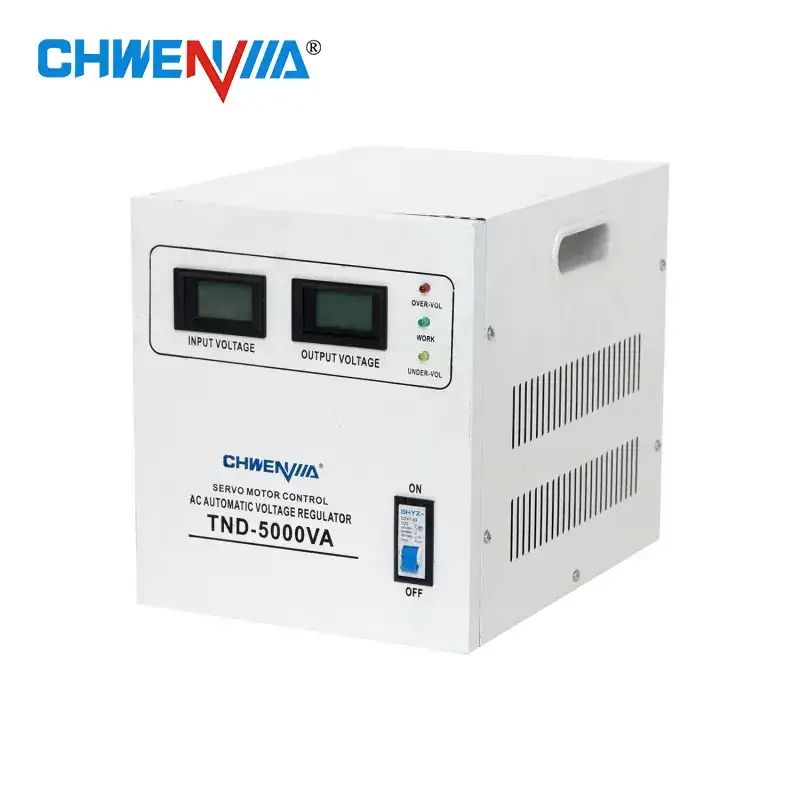
Walking the production floor strips away the marketing gloss. You see whether joints are welded by hand or fixed with cheap clips, whether wiring runs through protective conduits or dangles against sharp edges. Small details like consistent torque marks on bolts and uniform adhesive beads often signal a process that tolerates little variation. A factory tour makes those details impossible to hide.
Component choices become tangible when you watch inventory arrive. Stacks of branded bearings, nameplate circuit boards, and certified raw materials suggest a company that refuses to swap in anonymous substitutes. The opposite is just as revealing: unmarked boxes, reused offcuts, or bins of mixed fasteners hint at cost-driven decisions that may undermine durability. Seeing the supply shelf tells you more than any brochure.
Finally, observe how rejects are handled. If defective parts are quarantined, labeled, and traced back to their batch, quality control is alive. If they are quietly pushed back into the line, no amount of final inspection can rescue the product. A tour turns abstract promises into observable routines.
Relay, Servo, or Static: Matching the Right Stabilizer to Your Load
Relay stabilizers switch taps on a transformer with mechanical relays, so they work best when the load doesn't mind brief voltage dips or spikes during correction. If you're running simple tools, lights, or older compressors that can ride out a 20–40 ms interruption, a relay unit is the cost-effective choice. Just don't pair it with sensitive electronics that reset when the tap changes.
Servo stabilizers use a motor-driven variable transformer to continuously adjust voltage, which suits loads that need a smoother supply but can tolerate a slight delay while the motor moves. Think of CNC routers, lab equipment, or high-end audio systems. The correction isn't instantaneous, but it avoids the hard switching of relays and handles fluctuating input better over longer periods.
Static stabilizers rely on power electronics—IGBTs or SCRs—to correct voltage in milliseconds without moving parts. That makes them right for servers, medical imaging, or precision manufacturing where even a few cycles of distorted power can cause errors. They cost more and generate some heat, but if your load can't afford a reset or a motor's reaction time, static is the only realistic option.
Negotiating with Chinese Stabilizer Manufacturers Without the Guesswork
Walking into a negotiation with a Chinese stabilizer manufacturer without a firm grasp of your own technical requirements is like ordering dinner in a language you don't speak. You'll end up with something edible, maybe, but not what you actually wanted. The first step to cutting out guesswork is to nail down your exact specifications before you even send the first inquiry: heat stability range, processing window, regulatory limits for heavy metals, and any application-specific performance benchmarks. If your team uses vague terms like “good weatherability” or “standard tin content,” the manufacturer will fill those gaps with their own assumptions—often the cheapest viable option, not the best one for your production line. Write a one-page technical brief that includes test methods, acceptable tolerance bands, and reference samples. That document becomes your anchor when quotes come back with wildly different numbers, letting you compare apples to apples instead of hoping the supplier read your mind.
Chinese stabilizer producers range from massive, ISO-certified plants churning out container loads to small workshops that mix batches in repurposed drums. The guesswork disappears when you stop treating “Chinese manufacturer” as a single category and start mapping the actual landscape. Ask for batch consistency data, not just a certificate of analysis for one lucky sample. Request a trial run with your own resin and your own extrusion or injection parameters, then have the resulting pellets or parts tested independently before you commit to a container order. Plenty of buyers skip this step, sign a purchase order based on a low unit price, and then discover that lot-to-lot variation costs them downtime and rejected goods. Insist on a clear quality agreement that ties payment milestones to verified performance, not just to shipping documents. Once a manufacturer knows you actually test incoming material, the negotiating dynamic shifts from haggling over pennies to solving a shared technical problem.
Finally, remove guesswork from the human side of the table. The person answering your emails might be a sales engineer with deep formulation knowledge, or a trading company employee forwarding messages to an unseen factory. Ask directly: Who owns the formula? Who handles customer complaints? Can we speak to the lab manager on a video call? A factory that lets you see the production floor, even through a grainy phone camera, is giving you information that no glossy brochure can match. Also, be realistic about lead times and logistics before you start, because the cheapest FOB quote often hides inland freight, port congestion, or export packaging costs. When you combine precise specs, verified batch data, and open communication channels, the negotiation becomes a straightforward alignment of expectations rather than a blind bet.
Custom Voltage Stabilizer Orders: How Chinese Plants Adapt to Unusual Specs
When a purchase order arrives with a 190–260 V input range, 48 Hz line frequency, and analog 0–10 V status output instead of the usual relay contacts, Chinese voltage stabilizer plants tend to treat it as a standard engineering exercise rather than a special case. The first move is usually to compare the requested deviations against the closest existing design. A firmware change on the control board may be enough for odd voltage thresholds, but shifting the transformer taps or adding a wider servo motor gear range takes more time. What helps is that many factories keep records of past irregular builds, so a request for 220/127 V split-phase output or an IP54 enclosure for a 70 °C ambient rarely starts from zero.
Adaptation usually falls into three lanes: electrical, physical, and control interface. On the electrical side, a plant might recalculate capacitor bank values, add a harmonic filter for a nonlinear load, or change the under/over-voltage cutoff points. Mechanical requests often mean shrinking the cabinet to fit an existing rack or adding sun shields and thermostatically controlled fans for outdoor kiosks. For controls, it could be as simple as loading a different Modbus register map or printing the front panel in Spanish. Not every factory says yes; some smaller workshops decline 400 Hz or 690 V requests because their test equipment can't verify them. But those that specialize in export orders often run a quick prototype batch to confirm the design before quoting final tooling costs.
The more telling part is how testing and documentation change once the spec is no longer standard. Instead of shipping with a generic type-test report, the factory may set up a dedicated bench with the customer's actual input voltage curve and a mixed resistive/inductive load bank. They record recovery time, step response, and temperature rise at the non-standard limits, then send videos, scope captures, and a marked-up schematic for approval. This loop can add two to three weeks, but it removes the guesswork from both sides. A buyer who sends a clear deviation list early usually gets a stabilizer that matches the site conditions rather than a stock unit with a new nameplate, and the quote tends to be more realistic because it includes the extra verification work.
Beyond the Quote: After-Sales Support from China’s Stabilizer Makers
While a competitive price often grabs attention, the true test of a stabilizer maker emerges after the invoice is paid. China’s manufacturers have quietly shifted from transactional vendors to long-term support partners, offering firmware updates that accommodate evolving voltage standards, remote diagnostics via embedded IoT modules, and rapid replacement logistics that bypass traditional repair bottlenecks. Buyers who once hesitated over after-sales reach now discover that local service hubs and dedicated English-speaking engineers are standard, not exceptions.
This support ecosystem extends beyond warranty claims. Many factories now provide virtual commissioning sessions, where a technician in Shenzhen walks an installer in Lagos through parameter tuning via a shared screen. Spare parts libraries are pre-stocked in regional warehouses in Rotterdam, Dubai, and São Paulo, cutting downtime from weeks to days. What used to require a site visit now often resolves through a simple QR code scan on the unit, triggering a diagnostic report that pinpoints capacitor wear or cooling fan drift before failure occurs.
Perhaps most telling is how after-sales data flows back into design. Stabilizer makers mine field failure logs to refine PCB layout, upgrade varistor ratings, and adjust coating materials for humid coastal climates. The result is a feedback loop where every support ticket makes the next batch more robust. For importers, this turns after-sales from a risk line item into a quiet competitive advantage—one that competitors quoting only on paper cannot easily replicate.
FAQ
Several names come up regularly in sourcing conversations, including CHINT, Delixi, Tengen, and Hongbao Electric. Zhejiang and Shanghai tend to host many of these factories. Some, like Sanke and People Electric, have been supplying domestic and export markets for years, so they are often easier to verify through trade references.
Start with the actual voltage fluctuation range at the installation site, then check the stabilizer's input window and correction speed. Pay close attention to the type of regulation—servo-motor units handle wider swings but react slower, while relay-based models are faster but may click during adjustment. Also confirm the rated capacity in kVA and whether the manufacturer quotes conservative or optimistic figures.
Single-phase units are meant for homes, small shops, and light equipment running on 220–240V lines. Three-phase stabilizers handle 380–415V industrial loads. In practice, many Chinese factories build both, but single-phase versions tend to be more compact and may include features like time-delay start or overload protection that matter for refrigerators, air conditioners, and medical devices.
Yes, quite a few smaller and mid-sized factories in Wenzhou and Yueqing will adjust input/output voltage ranges, add specific socket types, or change the enclosure to wall-mount or floor-standing. Larger brands like Delixi and CHINT usually stick to standardized series, but you can still request special terminal blocks or display options through their export departments.
Look for CCC for domestic sales, CE for European imports, and sometimes RoHS compliance. Beyond labels, ask for a test report showing load regulation and efficiency at different input voltages. Factories that also produce for OEM clients often have better internal QC because they are used to third-party inspections.
Support varies more by distributor than by factory. The larger groups like CHINT and Delixi have regional offices and distributor networks that can supply control boards or servo motors. Smaller factories may respond faster to direct inquiries but might not keep spare parts for older models, so clarify the warranty period and whether replacement components can be shipped quickly.
Servo-motor stabilizers are popular for whole-home protection because they adjust smoothly and handle continuous voltage drift. Relay types are cheaper and respond instantly to sudden dips, but the audible switching and stepped output can be annoying in a quiet room. Many Chinese manufacturers now offer hybrid or static models that aim to combine both benefits, though they cost more.
Typical input windows run from 140V to 260V or 120V to 270V, depending on the model. Servo units usually correct within 0.5 to 1.5 seconds for a 10% change, while relay types can respond in under 100 milliseconds but in discrete steps. Always confirm these specs at full load, because some manufacturers quote no-load response times that look better than real-world performance.
Conclusion
China's single phase voltage stabilizer specialists have quietly moved from being anonymous contract assemblers to genuine engineering resources. A factory visit often reveals why: the better plants use thick copper windings rather than cost-cut aluminum, select relays and servo motors rated for continuous duty, and test every board under load before packing. This attention to component quality shows up in the field, where relay units handle simple resistive loads without fuss, servo stabilizers correct wide swings for precision tools, and static models protect sensitive electronics with millisecond response. Matching the right topology to your actual load—not just the cheapest option—separates a dependable purchase from a recurring headache.
Negotiating with Chinese stabilizer manufacturers no longer has to feel like guesswork if you arrive with clear specs: nominal input range, permissible output deviation, load type, and environmental conditions. Many plants are surprisingly flexible on custom orders, adapting terminal blocks, enclosures, voltage setpoints, or even input frequency to match regional grids or unusual machinery. What has changed just as much is after-sales behavior. The reliable makers now offer remote troubleshooting, stocked spare parts, and warranty terms that mean something beyond the initial quote. In short, the top Chinese single phase voltage stabilizer manufacturers earn attention through build honesty, technical matching, and support that holds up after delivery.
Contact Us
Contact Person: Mr. Jiang
Email: [email protected]
Tel/WhatsApp: +86-15057775503
Website: https://www.avrfactory.com/