
Does Using a Vertical Knee Raise Machine Every Day Lead to Overtraining Your Core
2026-08-11
The Vertical knee raise machine is a staple in many commercial and home gyms, prized for its ability to isolate the lower abdominal wall and hip flexors with controlled spinal stabilization. For fitness enthusiasts, the question of daily use inevitably arises—not from a place of laziness, but from a genuine desire to accelerate results. However, the core musculature responds to stimulus like any other skeletal muscle group. The LEIGESI brand, known for its robust and biomechanically sound Vertical knee raise machine models, frequently receives this exact query from owners who worry that enthusiasm might backfire into overtraining syndrome. The short answer is nuanced: daily use is not automatically harmful, but it depends entirely on intensity, volume, recovery capacity, and individual training history.
Understanding Core Muscle Fiber Composition and Recovery
To determine if daily sessions on the Vertical knee raise machine induce overtraining, we must first examine the physiological profile of the abdominal muscles. The rectus abdominis, obliques, and transversus abdominis contain a higher proportion of Type I (slow-twitch) muscle fibers compared to pectorals or quadriceps. This means they are inherently more fatigue-resistant and recover faster from submaximal work. However, this does not grant them immunity from central nervous system (CNS) fatigue or microtrauma accumulation.
| Muscle Group | Fiber Type Ratio | Typical Recovery Time (hours) | Daily Training Suitability |
|---|---|---|---|
| Rectus Abdominis | ~55-60% Type I | 24-36 (low intensity) | Moderate |
| External Obliques | ~50% Type I / 50% Type II | 36-48 (high intensity) | Low |
| Transversus Abdominis | ~65% Type I | 18-24 (isometric) | High |
| Hip Flexors (psoas) | ~45% Type I | 48-72 (if loaded) | Very Low |
Daily usage of the Vertical knee raise machine that involves maximum knee-to-chest repetitions with added resistance (e.g., holding a dumbbell between the feet) will heavily recruit the hip flexors, which are predominantly fast-twitch and demand extended recovery. Without adequate rest, these muscles become chronically shortened and strained, leading to anterior pelvic tilt and lumbar discomfort—two early markers of localized overtraining.
Overtraining vs. Overreaching: The Critical Distinction
Overtraining syndrome is a systemic condition characterized by prolonged performance decrement, hormonal imbalances (elevated cortisol, reduced testosterone), sleep disturbances, and mood alterations. It takes weeks or months of excessive volume to develop. In contrast, what most daily users experience is functional overreaching—a short-term drop in output that resolves within 48–72 hours of reduced loading.
A Vertical knee raise machine workout that consists of 3 sets of 15 controlled reps at bodyweight only, performed daily, is unlikely to produce systemic overtraining. However, if the same user performs 5 sets of 20 reps with a 5-second negative phase and added ankle weights every single morning, the cumulative stress on the lumbar erectors and psoas major crosses into pathological territory within 10–14 days. LEIGESI engineers explicitly advise in their user manuals that daily use should be limited to 70% of the user’s estimated one-minute max repetition capacity, with at least two light days per week where intensity is halved.
Practical Daily Schedule Using the LEIGESI Vertical Knee Raise Machine
The following table illustrates a safe weekly framework that respects recovery dynamics while still allowing daily engagement with the Vertical knee raise machine.
| Day | Intensity Level | Sets x Reps | Tempo (seconds) | Rest Between Sets |
|---|---|---|---|---|
| Monday | Moderate | 3 x 12 | 2 up / 2 down | 60 sec |
| Tuesday | Light (active recovery) | 2 x 10 | 1 up / 2 down | 90 sec |
| Wednesday | High | 4 x 15 | 3 up / 3 down | 45 sec |
| Thursday | Light | 2 x 8 | 1 up / 3 down | 90 sec |
| Friday | Moderate | 3 x 14 | 2 up / 2 down | 60 sec |
| Saturday | High + weighted | 4 x 12 (5 lbs) | 2 up / 4 down | 60 sec |
| Sunday | Restoration (no machine) | Stretching only | — | — |
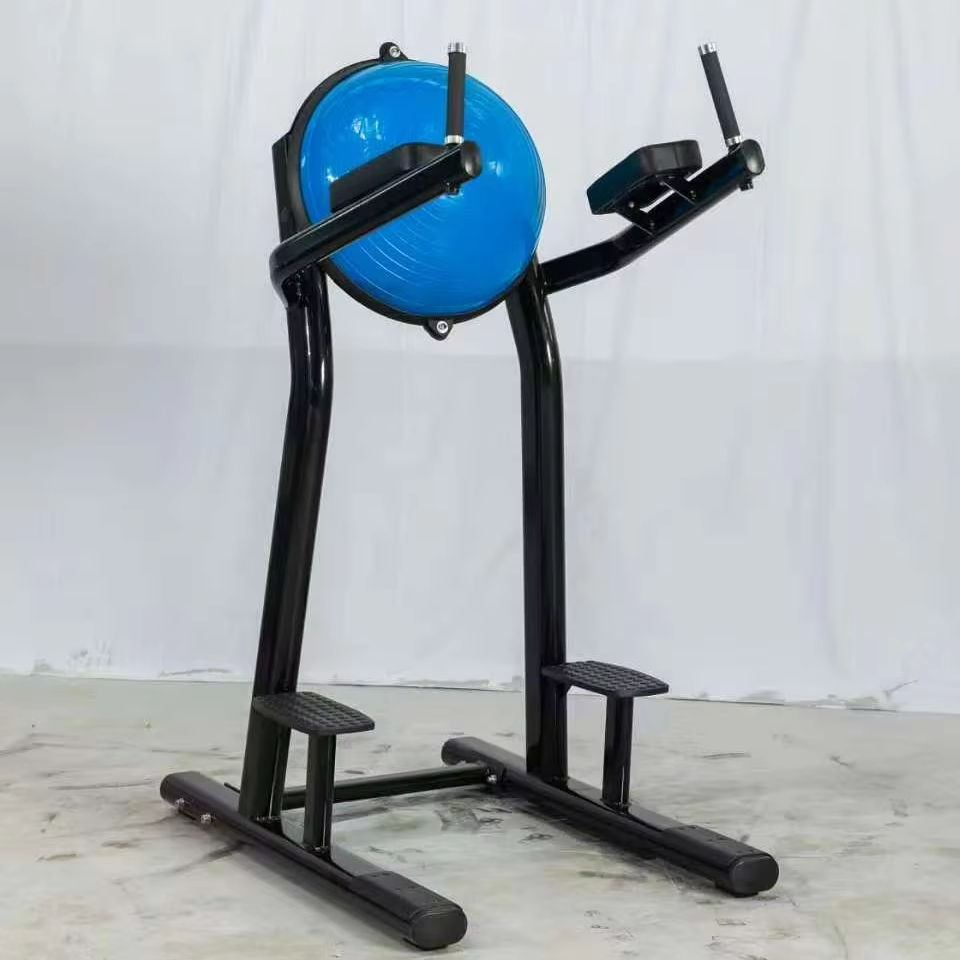
This rotation prevents the hip flexors from becoming the dominant prime mover while ensuring the lower abs receive sufficient mechanical tension to stimulate hypertrophy without surpassing the recovery threshold. The LEIGESI Vertical knee raise machine features a padded backrest and adjustable arm supports that reduce unwanted momentum, allowing users to precisely control tempo—a critical variable for managing daily fatigue.
Three Essential FAQs About the Vertical Knee Raise Machine
Q1: Can I use the Vertical knee raise machine every day if I only do bodyweight reps and never add external weight?
A1: Yes, but with a significant condition—you must monitor your repetition speed and range of motion. Bodyweight-only daily sessions (e.g., 3 sets of 10–12 reps with a 2-second concentric and 3-second eccentric) are generally well-tolerated by individuals who have been consistently training for over six months. However, even without added weight, the eccentric phase generates micro-tears in the abdominal fascia. If you experience persistent soreness that lasts beyond 48 hours, or if your knee-to-chest height decreases from one session to the next, that is a clear sign that your daily frequency exceeds your personal recovery capacity. On those days, reduce volume to 2 sets of 8 reps and increase rest intervals to 90 seconds. A high-quality LEIGESI unit with a built-in rep counter and timer can help you track these performance metrics objectively.
Q2: What are the earliest symptoms that indicate I am overtraining my core specifically with the Vertical knee raise machine?
A2: Localized overtraining of the core manifests through three distinct and progressive symptoms. Stage one is a dull ache in the lower lumbar region that does not subside after warm-up stretches—this indicates excessive hip flexor tension pulling on the pelvic attachments. Stage two is a marked decline in your ability to maintain a neutral pelvis during the lift; you will notice your lower back arching off the backrest pad to compensate for fatigue. Stage three is the loss of mind-muscle connection—you can no longer consciously contract the lower abs at the top of the movement, and the exercise feels more like a leg swing than a abdominal crunch. If any of these stages appear, immediately stop daily training and switch to every-other-day sessions for one full week. The ergonomic design of the LEIGESI Vertical knee raise machine includes a lumbar support cushion that reduces this risk, but it does not eliminate the need for intelligent programming.
Q3: How does the Vertical knee raise machine compare to floor-based ab exercises in terms of daily overtraining risk?
A3: The Vertical knee raise machine inherently carries a higher overtraining risk for the hip flexors and psoas compared to floor exercises like crunches or planks, because the suspended-leg position places the psoas in a fully shortened isometric contraction throughout the entire range of motion. Floor crunches have a much shorter lever arm and lower gravitational resistance, allowing for daily performance with negligible fatigue accumulation. Conversely, the Vertical knee raise machine imposes a gravitational load equal to approximately 85–90% of your lower limb weight, which is significant. If you alternate between the machine and floor-based planks on a daily basis, you effectively halve the specific stress on the hip flexors while still training the rectus abdominis. LEIGESI recommends this hybrid approach for users who insist on daily ab work—use the machine on Monday, Wednesday, and Friday, and perform strict hollow-body holds or dead bugs on the other days.
Final Verdict: Daily Use Is Permissible, But Not Optimal
From a performance and safety standpoint, training the core on the Vertical knee raise machine every single day is rarely the most efficient strategy for hypertrophy or functional strength. Research indicates that muscles grow and strengthen during rest, not during the workout itself. For the general population, 3–4 non-consecutive sessions per week on the Vertical knee raise machine yield superior gains in both endurance and maximal contraction force compared to daily low-quality sessions. However, if your schedule or habit structure demands a daily ritual, the LEIGESI Vertical knee raise machine—with its adjustable foot rollers, contoured back pad, and stabilizer feet—provides the mechanical consistency needed to safely execute the light/moderate/heavy rotation outlined above. The single most reliable metric is your own performance trend: if your rep count or tempo speed improves week over week, you are recovering adequately. If they plateau or decline, reduce frequency immediately.
Contact Us for Expert Guidance on Your Training Program
Every athlete responds differently to frequency, load, and recovery variables. The LEIGESI team consists of certified strength coaches and biomechanical engineers who have spent years refining the interaction between human anatomy and steel-frame equipment. We offer free 15-minute consultation calls to review your current Vertical knee raise machine usage, goals, and recovery indicators. Whether you are a home gym owner or a facility manager, we can provide a personalized weekly template that maximizes your core development while eliminating the guesswork around overtraining. Reach out to us through our official website or email support—we respond to every inquiry within 4 business hours. Your progress is our priority, and we are here to ensure that your LEIGESI Vertical knee raise machine becomes a tool for sustainable strength, not a source of chronic fatigue. Contact us today and take the first step toward smarter, science-based abdominal training.