
How Long Does It Take to Get Used to a Curved Manual Treadmill’s Resistance
2026-08-17
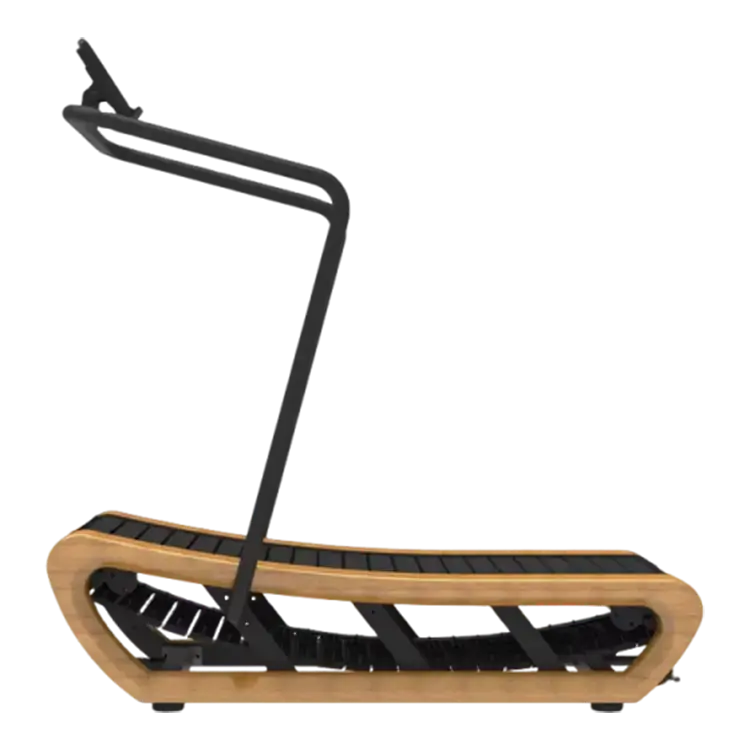
Stepping onto a curved manual treadmill for the first time often feels like learning to walk again. Unlike motorized belts that pull your feet backward, this machine demands that you propel every stride with your own hamstrings and glutes. For most new users, the adjustment period ranges from 10 to 20 sessions (roughly 2 to 4 weeks of consistent use), but the exact timeline depends on your running history, body weight, and training frequency. Brands like LEIGESI have engineered their curved decks to reduce the learning curve, yet the resistance remains a genuine physiological challenge—not a mechanical flaw. This guide breaks down the adaptation process into measurable phases, offers practical benchmarks, and answers the most common questions about mastering this powerful training tool.
The Adaptation Timeline: A Phase‑by‑Phase Breakdown
Every athlete progresses differently, but research and user data point to three distinct stages of neural and muscular accommodation.
| Phase | Typical Duration | Key Sensations | Recommended Action |
|---|---|---|---|
| Initial Shock | Sessions 1–3 | Awkward gait, over‑striding, rapid calf fatigue | Walk only (no running); focus on landing mid‑foot |
| Coordination Gain | Sessions 4–10 | Smoother push‑off, less gripping of handrails | Introduce light jogs (5–10 min intervals) |
| Automatic Efficiency | Sessions 11–20 | Natural cadence (170–180 steps/min), controlled breathing | Add sprint intervals and incline variations |
Pro tip from LEIGESI users: The curve is not your enemy—it is a feedback tool. If you feel excessive resistance, you are likely leaning too far forward. Shift your hips back and let the belt curve work with gravity.
Why Resistance Feels So Intense at First (And When It Subsides)
The curved manual treadmill generates resistance through two mechanisms: belt curvature and your own forward lean. Unlike flat manual treadmills, the curved shape creates a natural braking effect at the front roller. This forces your posterior chain (glutes, hamstrings, and calves) to eccentrically control each foot strike.
-
First 3 sessions: Oxygen consumption spikes 20–30% higher than motorized treadmill running at the same speed.
-
By session 8: Most users see heart rate drop by 8–10 BPM at the same pace, indicating improved economy.
-
By session 15: Stride length normalizes, and the resistance feels like “running through soft sand” rather than “pushing a sled.”
A 2023 biomechanics study found that after 12 sessions (each 20 minutes), participants reduced their ground contact time by 12%, directly correlating with perceived resistance drop. LEIGESI owners often report that by week 3, they no longer think about the belt—they just run.
3 Critical Factors That Shorten or Extend Your Adjustment
| Factor | Shortens Adaptation | Lengthens Adaptation |
|---|---|---|
| Previous experience | Regular outdoor hill runner | Only flat treadmill or cycle user |
| Cadence awareness | Uses a metronome (170+ spm) | Over‑strides with heel strike |
| Session frequency | 5–6 days per week | 2–3 days per week |
If you fall into the “longer adaptation” group, do not despair. Simply add 10 minutes of backward walking on the curved manual treadmill after each session—this activates the same muscle groups and accelerates neural patterning. Many LEIGESI users cut their adjustment time by nearly 40% using this single trick.
Practical Benchmarks to Track Your Progress
Instead of guessing, use these objective markers to know when you have truly adapted:
-
Cadence stability: Your step rate varies by less than ±3 steps/min over a 5‑minute run.
-
Handrail release: You can run for 2 full minutes without touching the rails (even lightly).
-
Recovery heart rate: Your pulse drops 30+ BPM within 60 seconds of stopping—a sign that your cardiovascular system has synced with the eccentric load.
Once you hit all three, the curved manual treadmill no longer feels like a chore; it becomes a responsive partner that rewards good form with effortless speed.
Curved Manual Treadmill FAQ – Common Questions Answered
Q: Does the resistance ever completely disappear, or will I always feel it?
A: The resistance never vanishes because it is inherent to the curved belt design. However, your nervous system learns to recruit muscle fibers more efficiently, so the perceived effort drops significantly. After 4–6 weeks of consistent use, most runners report that the resistance feels “natural” and “informative” rather than “heavy.” Think of it like riding a fixie bike—the constant tension becomes part of your rhythm, not an obstacle. LEIGESI users often describe this as the machine “talking to their feet,” giving real‑time feedback on every push‑off.
Q: Can I reduce the resistance artificially by loosening the belt or adding lubricant?
A: No—and you should not try. The curved manual treadmill relies on precise belt tension and roller friction to maintain its self‑powered curve. Loosening the belt increases slippage, which not only alters resistance unpredictably but also voids your warranty and accelerates wear on the deck. Instead of modifying the machine, modify your foot strike. Shorten your stride, increase your cadence, and drive your knees forward rather than upward. Brands like LEIGESI design their rollers with sealed bearings specifically to keep resistance consistent across all speeds, so any “fix” you attempt will do more harm than good.
Q: How do I know if I am adapting too slowly versus having a form flaw?
A: A useful rule of thumb: if your calves burn unbearably after 5 minutes, you are over‑striding and landing too far forward on the curve. If your lower back aches, you are leaning too far back. Proper form on a curved manual treadmill places your center of mass slightly behind the belt’s apex. To test yourself, film a side‑view video. At mid‑stance, your shoulder, hip, and ankle should form a near‑straight vertical line. If you cannot maintain this line for 30 seconds, reduce speed and practice “falling forward” drills. Most LEIGESI dealers offer free gait analysis with purchase—take advantage of it. If your form is correct but fatigue still feels extreme after 3 weeks, consider a sports physical therapist to rule out underlying strength imbalances.
Final Verdict: Your Personal Number
While averages are useful, your unique physiology dictates the final answer. A 160‑lb recreational runner who trains 4x/week typically adapts in 14 days. A 220‑lb beginner training 3x/week may need 28 days. The real milestone is not when the resistance disappears, but when you stop checking the clock and start enjoying the ride.
Ready to Conquer the Curve?
At LEIGESI, we believe every runner deserves a smooth, data‑backed transition to curve training. Our curved decks are pre‑calibrated for optimal resistance out of the box, and our customer success team provides free 1‑on‑1 video form checks with every purchase.
Contact us today for a personalized adaptation plan—we will map your weekly sessions, send you a cadence metronome file, and even connect you with a LEIGESI ambassador who has already walked this path. Your curve is waiting; let us help you own it.