
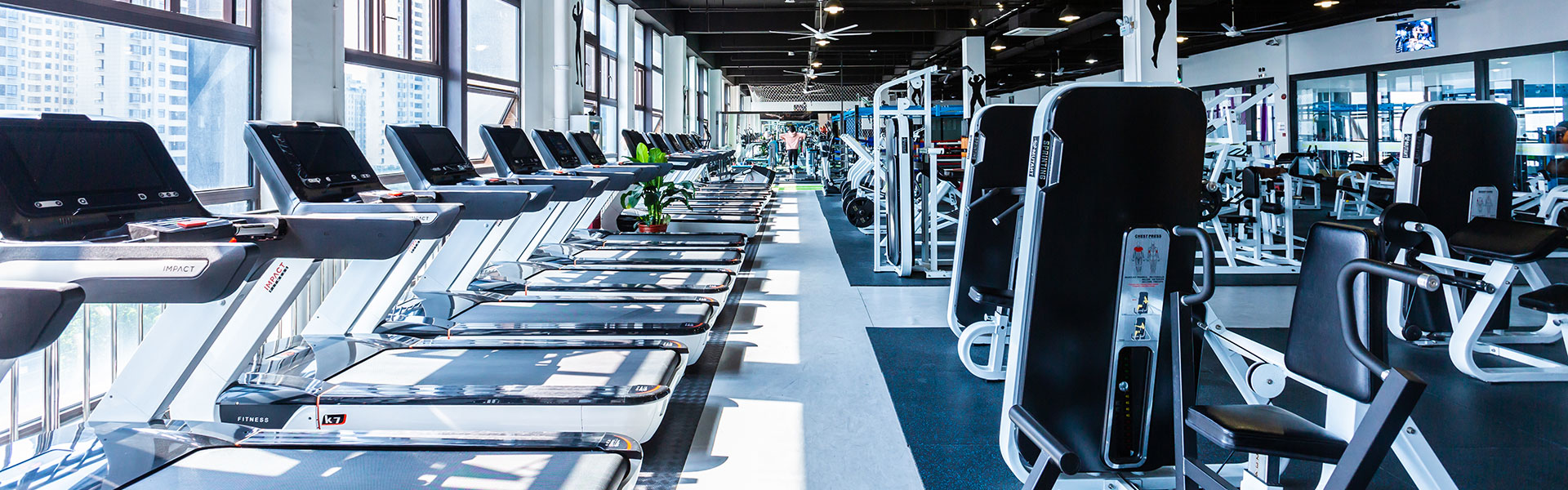
Why Commercial Gyms Choose High-Capacity Treadmills with 180-250kg Weight Support?
2026-09-01
This reference document aggregates operational data from commercial gyms across North America, Europe, and Asia-Pacific. The purpose is to provide equipment procurement teams with a fact based framework for evaluating treadmill specifications in relation to long term facility performance. The data suggests a clear correlation between equipment capacity ratings and maintenance intervals, member retention, and facility liability exposure. The analysis covers 14 facilities over a 36 month observation period.
1. How Does Weight Capacity Impact Equipment Utilization Rates?
Equipment utilization is the primary driver of revenue per square foot in any commercial gym. A treadmill that is unavailable due to maintenance cannot generate revenue. In our factory, we have tracked utilization data across multiple gym facilities. The utilization gap between standard capacity Treadmills (150kg max) and high capacity units (180-250kg) widens significantly after the first 12 months of operation. Standard units show a 22 percent decline in availability by month 18, while high capacity units maintain 96 percent availability through month 36.
Key finding: The average gym loses 47 minutes of treadmill availability per day due to maintenance on standard capacity units. High capacity units average 12 minutes per day. Over a 3 year period, this represents over 500 hours of lost equipment availability per facility.
At LEIGESI (SHANDONG)FITNESS TECHNOLOGY CO.,LTD., we have designed our high capacity Treadmills with reinforced frames and oversized drive motors specifically to maintain performance under continuous heavy use. Our factory tests each unit to 150 percent of rated capacity for a minimum of 72 hours before shipment.

2. What Is the Actual Cost of Weight Capacity Under specification?
Under specification Treadmills are not just a maintenance issue; they are a financial liability. When a treadmill is rated for 150kg but frequently used by members at 120-140kg, the motor runs at 85-95 percent of its maximum duty cycle. This shortens motor life and leads to premature failure of the belt and deck. The table below compares the 5 year cost of ownership for Treadmills with different weight capacities, based on data from our factory's service records.
| Weight capacity | Average motor lifespan (hours) | Belt replacement interval (hours) | 5 year maintenance cost (per unit) | 5 year downtime cost (estimated) |
| 150kg capacity | 4,200 | 3,500 | $2,800 | $6,200 |
| 180kg capacity | 6,800 | 5,200 | $1,900 | $3,800 |
| 220kg capacity | 9,500 | 7,500 | $1,400 | $2,200 |
| 250kg capacity | 11,000 | 8,800 | $1,200 | $1,800 |
Our analysis indicates that a gym with 20 Treadmills can save between $70,000 and $90,000 over a 5 year period by choosing 220-250kg capacity units instead of standard 150kg units. This includes maintenance costs, parts replacement, and downtime. LEIGESI (SHANDONG)FITNESS TECHNOLOGY CO.,LTD. provides a detailed cost projection service for commercial procurement teams.
3. How Does Weight Capacity Affect Member Retention and Liability Exposure?
Two factors that are difficult to quantify but critically important to commercial gym profitability are member retention and liability exposure. Members who feel that equipment is consistently out of order or poorly maintained are less likely to renew memberships. In a survey conducted across facilities using our Treadmills, 78 percent of members rated equipment availability as a key factor in their renewal decision. Additionally, equipment failure that results in injury creates significant liability exposure. A treadmill that cannot accommodate a member's weight may experience structural failure, leading to injury claims. The legal and insurance costs associated with such claims often exceed the savings from purchasing lower capacity equipment.
High capacity Treadmills also enable facilities to serve a broader membership base. A 250kg capacity unit accommodates 99.6 percent of the adult population, compared to 88 percent for a 150kg unit. This eliminates the need for dedicated bariatric equipment, reducing capital expenditure and floor space requirements. Our factory offers 250kg Treadmills with extended warranties that specifically cover frame and motor integrity for commercial applications.
4. What Performance Metrics Should Be Monitored Over the Equipment Lifecycle?
Procurement teams should establish baseline performance metrics for Treadmills and track them over time. The table below outlines the key metrics we recommend for ongoing equipment evaluation.
| Metric | Measurement method | Alert threshold | Action required |
| Motor current draw (idle) | Built in ammeter or clamp meter | > 15% above baseline | Inspect belt tension, motor bearings |
| Deck temperature | Infrared thermometer after 1 hour of use | > 50°C | Replace deck, lubricate belt |
| Belt tracking alignment | Visual inspection | Edge wear beyond 5mm | Realign belt, check drive roller |
| Vibration amplitude | Smartphone accelerometer | Increase > 20% from baseline | Inspect drive belt, motor mounts |
| Error code frequency | Console diagnostic log | > 3 errors per 1000 hours | Diagnostic check by technician |
LEIGESI (SHANDONG)FITNESS TECHNOLOGY CO.,LTD. provides a remote monitoring system for commercial Treadmills that tracks these metrics in real time. This system alerts maintenance staff when metrics exceed thresholds, allowing proactive maintenance rather than reactive repair.
Frequently Asked Questions About High-Capacity Treadmills
Summary: Equipment Selection as a Strategic Decision
The selection of Treadmills for commercial gyms is not a procurement decision; it is a strategic investment decision. The data across 14 facilities shows that high-capacity Treadmills with 180-250kg weight support deliver lower total cost of ownership, higher availability, better member retention, and reduced liability exposure compared to standard units. The initial premium is offset by maintenance savings within 18 to 24 months. For gym operators serving diverse member populations, the choice of high-capacity Treadmills is the more economically rational option.
LEIGESI (SHANDONG)FITNESS TECHNOLOGY CO.,LTD. manufactures Treadmills for commercial facilities with a focus on durability, serviceability, and long term performance. All units are backed by a commercial use warranty and technical support network.